WhatsApp: +86 18126157548 Email: kerry@alpinemold.com

Views: 0 Author: Site Editor Publish Time: 2026-05-08 Origin: Site


Injection mold tolerances are one of the most critical factors in ensuring that plastic parts fit, function, and perform as intended. Whether you’re producing a single prototype or a high-volume assembly, even a slight deviation in dimensions can compromise part functionality, cause assembly issues, or increase scrap rates.
In this guide, we will explore everything from standard injection molding tolerances to tight tolerance injection molding strategies, including how material selection, mold design, and process controls impact final dimensions.
Table of Contents
| 1. What Are Injection Molding Tolerances? |
| 2. Types of Injection Molding Tolerances |
3. Factors Affecting Injection Mold Tolerances and Their Solutions |
| 4. Tolerance Standards & Recommended Values |
| 5. Conclusion |
| 6. FAQ |
Injection mold tolerances refer to the allowable deviations between the actual dimensions of a plastic part after molding and the dimensions specified in the design drawings. For example, if a drawing requires a dimension of 50 mm with a tolerance of ±0.1 mm, the finished part is generally acceptable within the range of 49.9–50.1 mm. Injection molding tolerances are affected by factors such as material shrinkage, mold precision, part structure, wall thickness, cooling system, and processing parameters.
Controlling plastic injection molding tolerances is essential because they directly impact assembly fit, functional stability, and surface quality. For applications such as electronic housings, automotive components, medical devices, or precision structural parts, poor tolerance control can lead to excessive assembly gaps, loose snaps, deformation, leaks, rattling, or inconsistent mass production. Therefore, it is important to manage injection molding tolerance capability from the early stages through DFM analysis, optimized mold structure, and stable injection molding processes to ensure all critical dimensions meet the required specifications.
Definition:
Dimensional tolerances refer to the allowable deviation between the actual dimensions of a plastic part and the dimensions specified in the design drawings. This includes length, width, height, hole diameter, boss diameter, slot width, wall thickness, and other basic features.
Purpose:
Dimensional tolerances are primarily used to control the basic size accuracy of a part, ensuring that components can be properly assembled and function as intended. For example, in electronic housings, the alignment of upper and lower covers, snap-fit positions, screw post diameters, and mounting hole dimensions all require proper dimensional tolerance control.
Examples:
If a plastic housing is specified to be 100 mm long with a tolerance of ±0.10 mm, the finished part is generally acceptable within 99.90–100.10 mm.
If a screw boss is specified to be 3.00 mm with a tolerance of ±0.05 mm, the diameter must be controlled within 2.95–3.05 mm to ensure proper assembly of screws or metal inserts.
Definition:
Geometric tolerances refer to the allowable deviations in shape, orientation, and position of a plastic part, including flatness, straightness, circularity, perpendicularity, parallelism, and concentricity.
Purpose:
Geometric tolerances are mainly used to ensure structural stability and assembly accuracy. They are particularly important for plastic components that require precise positioning, rotation, sealing, or mating.
Examples:
Plastic gears, seals, connectors, and electronic structural components all rely on proper geometric tolerance control. If geometric tolerances are not maintained, assembly misalignment, uneven motion, poor sealing, or functional failure may occur.
Definition:
Form tolerances refer to the allowable deviation of a single surface or structure itself, such as whether a flat surface is warped, a circular hole is deformed, or a curved surface meets design requirements.
Purpose:
Form tolerances are primarily used to control the appearance and structural function of a part. Large plastic panels, housing covers, transparent parts, or decorative components require proper form tolerance control to prevent warpage, deformation, uneven assembly, or poor appearance.
Examples:
A large plastic panel on an electronic device must remain flat within tolerance to ensure proper assembly with other components and to avoid visible gaps.
A transparent cover for a sensor or display must maintain precise curvature and flatness to ensure optical clarity and correct alignment.
Decorative parts such as plastic trim or faceplates must retain uniform surface shape to avoid distortion that would affect aesthetics and fit.
Definition:
Assembly tolerances refer to the allowable dimensional, positional, and gap deviations between related structures when a plastic part is combined with other components. This includes hole positions, snaps, locating posts, screw posts, and fit gaps between upper and lower covers.
Purpose:
Assembly tolerances ensure that parts can be assembled smoothly and maintain stable functionality. Poor assembly tolerance control may result in misaligned screw holes, snaps that cannot engage properly, excessive gaps between covers, over-tight assemblies, rattling, or sealing issues.
Examples:
In electronic housings, if the snap-fit positions of the upper and lower covers deviate too much, the covers may not engage.
Uneven gaps between covers can lead to loose assembly, misalignment, or unsatisfactory appearance.
The tolerance of injection molded parts is not determined solely by mold precision. Material shrinkage, part geometry, and mold design all influence how the molten plastic fills the cavity, solidifies, and is ejected, while injection molding parameters affect the dimensional stability of each molded piece.
To ensure consistent part dimensions and smooth assembly, it is necessary to control injection mold tolerances from multiple aspects, including material selection, part design, mold manufacturing, and injection molding process. The following sections discuss the main factors that affect injection molding tolerances and the corresponding solutions to achieve stable, high-quality plastic parts.
Material properties are a fundamental factor affecting injection mold tolerances. Different plastic materials have varying shrinkage rates, flow characteristics, and thermal expansion during cooling, which directly impact the dimensional stability of the final part. Generally, amorphous materials such as ABS, PC, and PS have relatively low shrinkage, typically ranging from 0.3% to 0.8%, while semi-crystalline materials such as PP, PA, POM, and PEEK usually exhibit higher shrinkage, sometimes reaching 1.0%–2.5%, making tolerance control more challenging.
Key Factors:
Variation in shrinkage rate: Different materials shrink differently after cooling, which can lead to parts being slightly larger or smaller than intended.
Material batch variations: The same type of material from different brands, grades, or production lots may have different shrinkage behavior.
Flow characteristics: Poor material flow can result in uneven filling, affecting local dimensional stability.
Effect of reinforcements: Glass fibers or mineral fillers can reduce overall shrinkage but may introduce anisotropic shrinkage in different directions.
Material moisture content: Insufficiently dried hygroscopic materials such as PA, PC, or PBT can affect both part dimensions and performance.
Control Measures:
Allow proper shrinkage compensation during mold design based on material datasheets and practical molding experience.
For high-shrinkage materials such as PP, PA, or POM, evaluate potential dimensional deviations and warpage risks in advance.
During mass production, standardize material brand, grade, and batch to minimize dimensional variation caused by material differences.
For glass-filled materials, assess directional shrinkage based on flow orientation and optimize gate design and part structure accordingly.
Fully dry hygroscopic materials before molding, following supplier recommendations—for example, PA, PC, and PBT require specific drying conditions to maintain dimensional accuracy.
Part design directly affects the shrinkage, cooling, and deformation behavior of injection molded parts. Even if the mold is machined with high precision, an unreasonable part structure can still lead to shrinkage, warpage, hole misalignment, or assembly issues. In general, wall thickness should be kept as uniform as possible, with variations ideally limited to 15%–25%. Rib thickness is typically recommended to be 40%–60% of the main wall thickness to reduce shrinkage risk.
Key Factors:
Non-uniform wall thickness: Large differences in thickness result in uneven cooling, leading to differential shrinkage and warpage.
Excessively thick local structures: Screw posts, ribs, and bosses that are too thick can cause shrinkage and dimensional deviations.
Complex geometries: Deep ribs, undercuts, and thin-wall sections affect material flow and demolding stability.
Undefined critical dimensions: Failure to distinguish between critical and non-critical dimensions can result in improper tolerance assignments.
Large part size: Larger components experience greater overall shrinkage, making it more difficult to maintain precise injection molding tolerances.
Control Measures:
Perform DFM analysis during the design stage to identify potential shrinkage, warpage, demolding, and assembly risks.
Maintain uniform wall thickness and avoid abrupt thickness changes or local material accumulation.
Control rib thickness at 40%–60% of the main wall to minimize back-wall shrinkage.
Add fillets and appropriate draft angles (commonly 0.5°–2°) to screw posts, snaps, and bosses to facilitate demolding.
Clearly define Critical-to-Quality (CTQ) dimensions, giving priority to features that affect assembly and function.
Relax tolerances for non-critical dimensions where possible to avoid unnecessarily increasing mold complexity and production costs.
Mold design and manufacturing form the foundation for controlling injection mold tolerances. Mold cavities, cores, inserts, sliders, side actions, gates, cooling channels, and ejection mechanisms all affect part dimensions. For precision injection molded parts, key mold features typically require machining accuracy between ±0.01 mm and ±0.05 mm. For standard plastic parts, mold machining tolerances can be relaxed, depending on part requirements and assembly specifications.
Key Factors:
Mold machining precision: Deviations in cavities, cores, holes, or inserts directly affect part dimensions.
Mold assembly accuracy: Misalignment of sliders, side actions, inserts, or guide structures can impact hole positions, snaps, and mating surface accuracy.
Gate and runner design: Improper gate location or runner layout can cause unbalanced filling and uneven shrinkage.
Cooling system design: Uneven cooling leads to differential shrinkage, warpage, or dimensional variation across the part.
Ejection mechanism design: Uneven ejection forces can deform the part, cause scratches, or change local dimensions.
Mold wear: During long-term mass production, wear on sliders, parting surfaces, inserts, and ejector pin holes can reduce tolerance stability.
Control Measures:
Perform DFM and Moldflow analysis before mold design to optimize gate, runner, cooling, and ejection layouts.
Use high-precision machining methods, such as CNC, EDM, and wire cutting, to ensure the accuracy of cavities, cores, and critical mold features.
Inspect critical dimensions, holes, mating surfaces, and assembly structures using CMM or projection measurement tools.
Optimize cooling channel layout to minimize local temperature differences and uneven shrinkage.
Design ejector pins, stripper plates, and side actions to ensure uniform demolding forces.
Ensure moving parts such as sliders, side actions, and inserts are correctly positioned and wear-resistant to reduce gaps and deviations over time.
For high-volume molds, establish a regular maintenance schedule to inspect parting surfaces, sliders, inserts, ejector pins, and cooling channels according to production cycles.
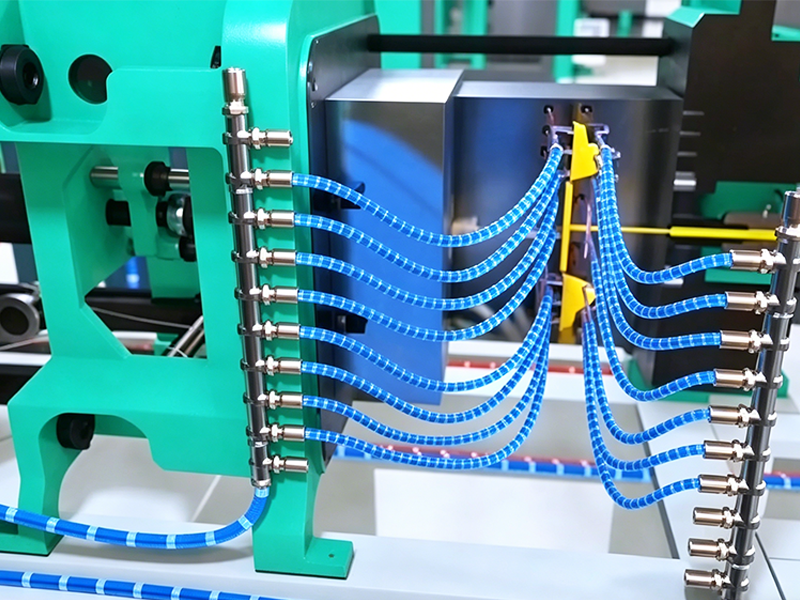
Injection molding process parameters determine the dimensional repeatability of parts during mass production. Even if the part design and mold precision are accurate, inconsistent injection pressure, packing, temperature, or cooling time can still cause dimensional variation, shrinkage, warpage, or assembly issues. For precision injection molded parts, fluctuations in critical dimensions during production are typically controlled within ±0.05 mm to ±0.10 mm, depending on the material and customer drawing requirements.
Key Factors:
Injection pressure and speed: Insufficient pressure can lead to incomplete filling, while excessive speed may increase internal stress or cause flash.
Packing pressure and time: Inadequate packing results in shrinkage or undersized dimensions, while excessive packing can create internal stress or demolding difficulties.
Material and mold temperature: Temperature fluctuations affect material flow and shrinkage, impacting dimensional stability.
Cooling time: Insufficient cooling can cause continued shrinkage or deformation after ejection, while excessive cooling reduces production efficiency.
Cycle time variation: Inconsistent cycle times during mass production can lead to dimensional fluctuations between parts.
Control Measures:
Establish a stable molding process window during trial runs, confirming optimal pressure, speed, temperature, packing, and cooling time.
Fix critical process parameters during mass production to prevent dimensional instability caused by frequent adjustments.
Conduct first-article inspections and in-process monitoring for key dimensions to detect variations promptly.
Maintain consistent material and mold temperatures and stable cooling times to minimize shrinkage variation.
For parts prone to shrinkage or warpage, focus on optimizing packing pressure, packing time, and cooling conditions.
Record complete process parameters for precision parts to facilitate traceability, analysis, and future process optimization.
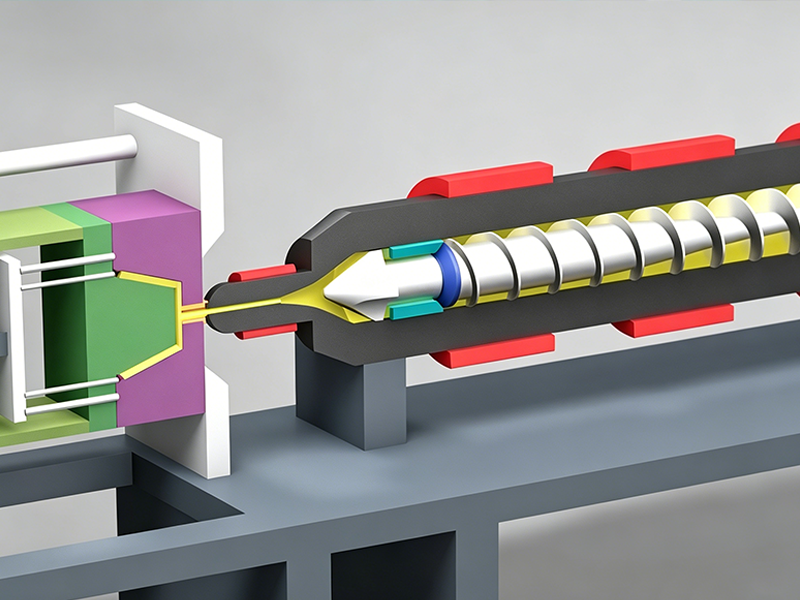
Setting clear injection molding tolerance standards ensures consistent part quality, reliable assembly, and predictable manufacturing. These standards guide designers and molders in defining acceptable dimensional variations based on material, part size, and critical features.
Several global standards are commonly used in injection molding:
ISO 20457:2018 – Provides general dimensional tolerances for plastic molded parts, depending on part size and complexity.
ISO 20461 – Offers more detailed guidance on linear dimensions.
DIN 16901 – Categorizes tolerances by precision levels: coarse, medium, fine, and very fine.
ISO 8062-1 – Geometrical product specifications (GPS), relevant for molded parts that are post-machined.
Tighter tolerance classes require higher mold precision, more controlled processes, and sometimes post-processing steps, which increases production cost. Looser tolerance classes reduce cost but may not be suitable for critical dimensions.
Tolerance ranges vary depending on material, feature size, and application requirements. Typical industry references are as follows:
Feature / Material | Commercial Tolerance | Fine / Tight Tolerance | Typical Applications |
Small holes (≤10 mm) | ±0.1 mm | ±0.025 mm | Fasteners, connectors |
Medium features (10–50 mm) | ±0.15 mm | ±0.03–0.05 mm | Electronic housings, mechanical fittings |
Large features (>50 mm) | ±0.2 mm | ±0.05 mm | Covers, structural components |
Wall thickness uniformity | ±5% | ±2–3% | Prevents warpage and sink marks |
Geometric features | ±0.1–0.2 mm | ±0.025–0.05 mm | Straightness, flatness, concentricity |
Commercial tolerances are suitable for parts where slight deviations do not affect function, while fine tolerances are required for medical devices, electronic components, and precision mechanical assemblies. Critical features should always be assigned the tightest tolerances to ensure functionality and assembly fit.
Plastic shrinkage is a key factor in determining final part dimensions. Mold cavities are machined slightly larger to account for the expected shrinkage, which depends on the resin type and part geometry.
Material | Typical Linear Shrinkage (%) | Applications |
ABS | 0.7–1.6 | Consumer products, electronics housings |
PC/ABS | 0.5–0.7 | Transparent or high-impact housings |
POM (Acetal) | 1.8–2.5 | Mechanical parts, gears, fasteners |
PA GF 30% | 0.5 | Glass-filled nylon for strength and dimensional stability |
PP | 1–3 | Bottles, living hinges |
PE | 1.5–4 | Packaging, crates, containers |
PEEK | 1.2–1.5 | High-performance, medical, aerospace |
Designers and molders must account for shrinkage when specifying cavity dimensions and expected tolerances. Reinforced or semi-crystalline resins often behave differently in different geometries, so shrinkage must be evaluated carefully for critical features.
Understanding and controlling injection mold tolerances is essential for producing high-quality plastic parts that fit, function, and perform reliably. By carefully considering material properties, part design, mold construction, and process parameters, manufacturers can achieve consistent dimensional accuracy and minimize defects across both prototypes and mass production.
Alpine Mold specializes in high-precision injection mold manufacturing and injection molding services, with full in-house design and manufacturing capabilities. From DFM analysis, mold design, and precision machining to mold trials and mass production, every step is completed internally under strict quality control. If your products require high dimensional accuracy, reliable assembly, or superior surface quality, Alpine Mold can provide dependable mold and injection molding solutions to help you produce plastic parts with consistent dimensions, smooth assembly, and uniform quality.
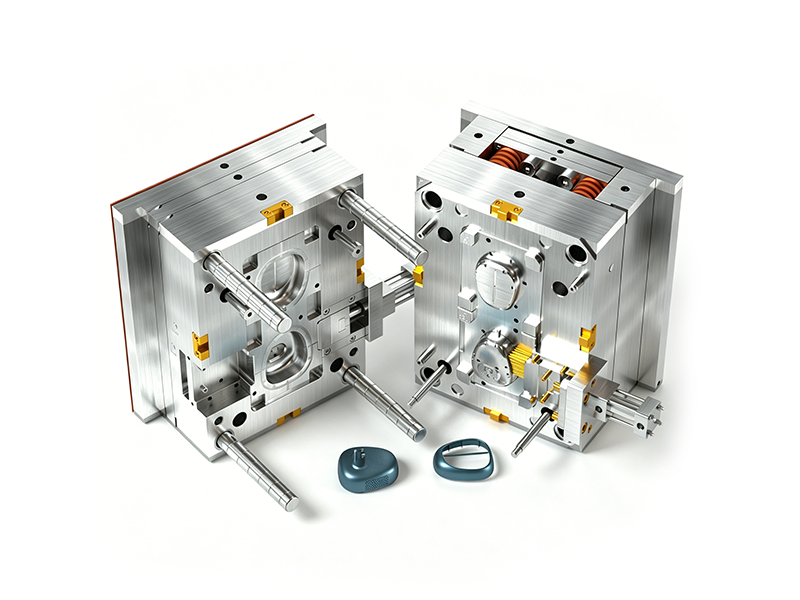
The average tolerance for injection molding depends on part size, material, and application requirements. For standard plastic parts, typical tolerances range from ±0.1 mm for commercial features to ±0.025–0.05 mm for critical dimensions. Tighter tolerances are achievable for small, high-precision components, such as medical devices or electronic housings, when the mold, material, and process are carefully controlled.
The lifespan of an injection mold depends on its design, material, and maintenance. Standard steel molds can produce tens of thousands to several hundred thousand shots, while high-quality hardened steel molds can last over a million cycles with proper care. Mold usage also depends on part complexity, material abrasiveness, and cycle parameters. Regular maintenance and inspection are essential to maintain dimensional consistency and achieve reliable injection mold tolerances throughout the mold life.
Mold tolerance refers to the precision with which the mold cavity and core are machined. Typical mold machining tolerances range from ±0.05 mm for standard molds to ±0.01 mm for tight tolerance molds. Accurate mold machining is critical because any deviation is directly transferred to the molded part. Factors such as CNC machining accuracy, EDM finishing, and mold assembly alignment all influence the final tolerance of the part.


