
Views: 0 Author: Site Editor Publish Time: 2026-06-12 Origin: Site


Table of Contents
1. What Is Included in Injection Molding Cost? |
2. Injection Mold Cost |
3. Injection Molding Production Costs |
4. How Much Does Injection Molding Cost? |
5. How do I obtain an injection molding quote? |
6. Conclusion |
7. FAQ |
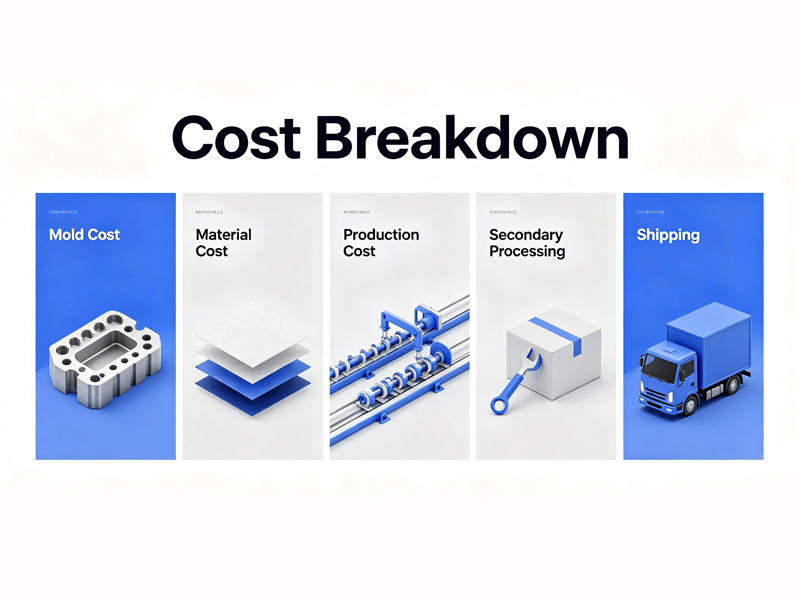
When you receive an injection molding quotation, the price usually does not only mean the cost of making one plastic part. It is made up of several cost items. In general, injection molding cost includes mold cost, plastic material cost, production cost, secondary processing cost, packaging cost, and shipping cost.
The main cost focus may vary from project to project. If you only need to develop a mold first, the mold cost will usually take up a larger part of the budget. If you need long-term mass production, then the unit production cost, material waste, production cycle, and production efficiency will become more important.
To better understand a quotation, you can first break down the cost of injection molding into the following parts:
Cost Item |
Main Content |
Impact on Price |
Mold Cost |
Mold design, mold steel, CNC machining, EDM machining, wire cutting, polishing, assembly, and mold trial |
Usually the largest upfront investment |
Material Cost |
Plastic resins such as ABS, PP, PC, PA, POM, PMMA, etc. |
Affected by material price, part weight, and material waste |
Injection Molding Production Cost |
Injection molding machine, labor, cycle time, machine tonnage, and energy consumption |
Directly affects the unit price of each molded part |
Secondary Processing Cost |
Painting, silk screen printing, pad printing, laser engraving, plating, heat-set inserts, assembly, etc. |
The more processes required, the higher the cost |
Packaging Cost |
Standard packaging, individual packaging, anti-scratch packaging, export packaging, etc. |
Depends on appearance requirements and shipping method |
Shipping Cost |
Express delivery, air freight, sea freight, or rail transportation |
Depends on cargo volume, weight, and destination |
Therefore, when evaluating injection molding costs, you should not only look at the mold price or the unit price. A more accurate way is to consider your part structure, material requirements, annual volume, and quality standards together, then judge whether the overall project cost is reasonable.
For low-volume projects, mold cost may be the main part of the budget. For high-volume production, optimizing the production cycle, reducing material waste, and improving the yield rate can significantly reduce long-term plastic injection molding cost.
Injection mold cost is one of the most important upfront investments in the overall injection molding cost. A mold is not a one-time machined part. It is a precision tool used for long-term production. Before a mold is ready for production, it usually needs to go through part structure analysis, DFM review, mold design, mold steel preparation, CNC machining, EDM machining, wire cutting, polishing, assembly, mold trial, and possible modifications.The more stable the mold quality is, the better the dimensional stability, surface quality, and production efficiency will be during the later injection molding process.
In general, a simple single-cavity injection mold may cost a few thousand dollars. A standard production mold is usually more expensive. If the mold is large, multi-cavity, uses a hot runner system, includes sliders, or is designed for precision medical parts, automotive parts, or long mold life production, the mold cost may reach tens of thousands of dollars or even exceed one hundred thousand dollars.This price range is only for general reference. The actual injection mold cost still needs to be evaluated based on your product drawings, plastic material, part size, part structure, cavity number, mold life, and production requirements.
The main factors that affect injection mold cost include the following:
Factor |
Impact on Mold Cost |
Part Size |
The larger the part, the higher the mold steel cost, machining time, and equipment requirements |
Part Complexity |
Undercuts, threads, thin walls, deep cavities, and complex structures increase mold difficulty |
Cavity Number |
More cavities increase the upfront mold cost, but can reduce the long-term unit production cost |
Mold Steel |
Different mold steels have different prices, hardness, mold life, and machining difficulty |
Runner System |
A hot runner system costs more than a cold runner system, but it is more suitable for high-volume production |
Precision and Appearance Requirements |
High-gloss surfaces, transparent parts, textures, and tight tolerances increase machining and polishing costs |
Generally, the larger the product dimensions, the higher the mold cost. Large products require larger mold bases, more steel, and longer CNC machining times; they may also necessitate higher-tonnage injection molding machines for mold trials and mass production. For instance, the mold costs for large plastic parts—such as automotive exterior components, home appliance housings, or industrial equipment casings—are typically significantly higher than those for small electronic housings or standard plastic accessories.
2.2 Product Structural Complexity
Product structure is a key factor influencing injection molding costs. If the product structure is simple—featuring a clear parting line and no undercuts—mold design and machining are relatively straightforward. However, if the product includes side holes, internal threads, snap-fits, undercuts, deep ribs, thin-walled sections, or complex assembly requirements, additional mechanisms such as sliders, lifters, inserts, core-pulling systems, or secondary ejection structures may be required. The greater the structural complexity, the more time is needed for design and machining, and the greater the difficulty of assembly and debugging.
2.3 Number of Mold Cavities
The number of mold cavities directly impacts plastic injection molding costs. Single-cavity molds involve lower upfront investment and are suitable for initial testing, small-batch production, or product validation. If demand is high, multi-cavity molds—such as 2-cavity, 4-cavity, 8-cavity, or even higher configurations—can be considered. While multi-cavity molds have higher initial costs, they produce more parts per cycle, thereby reducing the per-unit injection molding cost in the long run.
Mold material is a crucial factor affecting injection mold costs. Materials vary in strength, hardness, wear resistance, polishability, corrosion resistance, and machinability; these differences ultimately influence the mold price, mold lifespan, and production stability. Generally, injection mold materials fall into two main categories: steel molds and aluminum molds.
Steel molds are currently the most common choice for injection molding and are better suited for medium-to-high volume production and long-term mass production projects. For example, when annual product demand reaches 10,000, 50,000, 100,000, or even higher units, steel molds typically offer greater stability than aluminum molds. Depending on the steel grade, heat treatment method, and mold structure, the service life of steel molds can typically reach 100,000, 300,000, or 500,000 cycles—or even exceed 1,000,000 cycles. Consequently, steel molds are frequently used for automotive components, medical plastic parts, electronic and electrical housings, industrial accessories, and plastic products containing glass fiber.
Aluminum molds are primarily used for rapid tooling, product validation, small-batch trial production, or projects with tight delivery schedules. Aluminum is fast to machine, resulting in a relatively short mold manufacturing cycle and potentially lower upfront costs. For projects requiring only hundreds to a few thousand units for sample testing or market validation, aluminum molds can accelerate product development. However, aluminum molds generally offer lower wear resistance and load-bearing capacity compared to steel molds; their lifespan is typically suited for low-volume production runs of approximately 1,000 to 10,000 cycles, depending on the product material, structural complexity, and injection molding conditions.
Below is a comparison of common injection mold materials:
Mold Material |
Type |
Reference Price USD/ton |
Reference Mold Life |
Main Features |
P20 |
Steel |
2,658–5,168 |
100,000–300,000 shots |
Cost-effective, good machinability, and commonly used for standard injection molds |
718 / 718H |
Steel |
3,691–6,644 |
300,000–500,000 shots |
Better stability and polishing performance than P20, suitable for medium-life production molds |
NAK80 |
Steel |
6,644–11,812 |
300,000–500,000 shots |
Pre-hardened steel with good mirror polishing performance and high dimensional stability, suitable for appearance parts |
S136 |
Steel |
6,644–17,718 |
500,000–1,000,000+ shots |
Good corrosion resistance and excellent polishing performance, suitable for transparent parts, high-gloss parts, and medical products |
H13 |
Steel |
5,168–10,336 |
500,000–1,000,000+ shots |
Good heat resistance and wear resistance, suitable for high-temperature, high-wear, or glass-fiber-reinforced materials |
6061 Aluminum |
Aluminum |
3,544–5,168 |
About 1,000–5,000 shots |
Good machinability and lower cost, but lower strength and wear resistance than 7075 |
7075 Aluminum |
Aluminum |
5,168–8,859 |
About 5,000–10,000 shots |
Higher strength and fast machining speed, suitable for rapid tooling and low-volume injection molding production |
When selecting mold materials, you should not focus solely on the initial price; instead, consider factors such as the product material, production volume, mold lifespan, surface finish requirements, and ongoing maintenance costs. If your project requires only a few hundred to a few thousand samples, aluminum molds or simplified molds may be more suitable for keeping initial budgets low. However, if your product requires stable, long-term mass production—especially with annual volumes exceeding tens of thousands of units—choosing the right steel grade is advantageous. Although this increases initial injection molding costs, it reduces risks associated with repairs, downtime, and product defects, ultimately helping to control long-term costs.
The runner system also affects injection mold costs. Cold runner molds feature a relatively simple structure and lower initial costs, but they generate runner waste (sprues) during production, resulting in lower material utilization. Hot runner molds entail higher upfront costs but minimize material waste and boost production efficiency, making them better suited for high-volume production projects. Therefore, when choosing between cold and hot runner systems, consider your annual production volume and long-term costs rather than just the mold price.
Mold costs will rise if your product demands tight dimensional tolerances, specific surface finishes, high transparency, precise assembly clearances, or functional stability. For instance, transparent parts require superior polishing grades; high-gloss products demand higher standards for mold surface quality and venting; and products featuring textured surfaces, coatings, or complex assembly requirements necessitate early consideration—during the design phase—of issues like shrinkage, warpage, parting lines, and ejector pin marks. These requirements extend the time needed for machining, inspection, and mold trials.
In summary, injection mold costs are not determined simply by "product size"; rather, they are shaped by a combination of product structure, mold design, steel selection, the number of cavities, precision requirements, and production goals. For projects requiring genuine mass production, a well-designed mold manufactured to high standards often helps control long-term costs more effectively than a low-priced alternative.
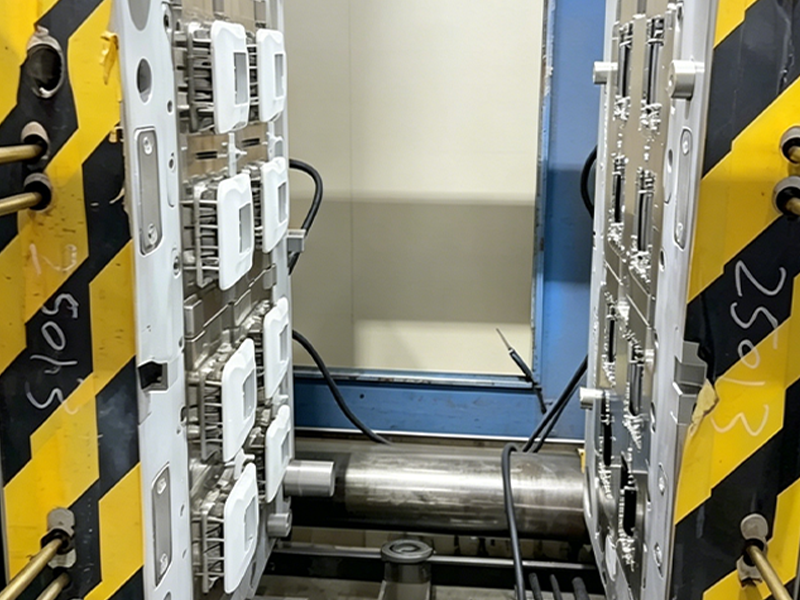
Injection molding production costs generally refer to the expenses incurred for each plastic part produced after the mold is completed. Unlike mold costs, production costs have a more direct impact on the unit price of your product. For long-term mass production projects, even if mold costs are high, the final cost per unit can be effectively reduced provided that production efficiency is stable, cycle times are reasonable, and material utilization is high. Therefore, when evaluating injection molding costs, one must focus not only on the initial mold price but also on the ongoing production costs.
Generally speaking, injection molding production costs are primarily determined by material costs, machine costs, labor costs, production cycle times, product weight, yield rates, post-processing, and packaging methods. The following are the key factors influencing injection molding production costs:
Cost Factor |
Main Content |
Impact on Unit Cost |
Plastic Material |
ABS, PP, PC, PA, POM, PMMA, TPE, and other plastic resins |
The higher the material price and the heavier the part, the higher the cost |
Part Weight |
Net weight of each part and runner weight |
Directly affects material consumption |
Injection Machine Tonnage |
Different machines such as 50T, 100T, 250T, 500T, 800T, etc. |
Larger machines usually have higher hourly costs |
Production Cycle |
The time required for one molding cycle, from mold closing to mold opening and part removal |
The shorter the cycle time, the higher the output per unit time |
Cavity Number |
Single-cavity mold, multi-cavity mold, or family mold |
More cavities can reduce the cost shared by each part |
Labor Cost |
Operation, inspection, trimming, packaging, and other manual work |
The lower the automation level, the higher the labor cost |
Yield Rate |
Product pass rate and production stability |
The higher the defect rate, the greater the material and time loss |
Secondary Processing |
Painting, silk screen printing, pad printing, laser engraving, assembly, heat-set inserts, etc. |
The more processes required, the higher the unit cost |
Packaging Method |
Standard packaging, individual packaging, anti-scratch packaging, export packaging |
Higher appearance requirements usually lead to higher packaging costs |
Material cost is the most direct component of injection molding production costs. Prices vary significantly across different plastic materials; standard PP and ABS have relatively low costs, whereas engineering plastics such as PC, PA66, POM, PMMA, PPSU, and PEI command higher prices. Material costs increase further if specific requirements—such as fire-retardant, food-grade, or medical-grade ratings, UV resistance, high-temperature resistance, glass-fiber reinforcement, or special colors—are needed.
Material costs can generally be estimated as follows:
Material Cost = Product Weight × Unit Material Price + Sprue/Runner Waste
Using a cold-runner mold generates sprue and runner waste during production, resulting in relatively higher material loss; conversely, using a hot-runner mold minimizes this waste, making it more suitable for high-volume production projects.
To better understand how different plastic materials impact injection molding production costs, refer to the price ranges for common materials below. Please note that raw plastic material prices are influenced by factors such as brand, grade, performance specifications, purchase volume, and market conditions; the prices listed here serve only as a reference for early-stage cost estimation of injection molding projects.
Plastic Material |
Reference Price USD/ton |
Cost Level |
Main Features |
PP |
$1,000–1,300 |
Low |
Low cost, lightweight, and good chemical resistance |
ABS |
$1,300–1,800 |
Low to Medium |
Good toughness, easy to process, and good surface finish |
PE |
$1,000–1,400 |
Low |
Good chemical resistance and flexibility |
TPE / TPU |
$2,000–4,500 |
Medium to High |
Soft and elastic, suitable for overmolding and soft-touch products |
PC |
$2,300–3,800 |
Medium to High |
High strength, good impact resistance, and good transparency |
PA6 / PA66 |
$2,000–4,000 |
Medium to High |
High strength and wear resistance, suitable for structural parts |
POM |
$1,600–2,500 |
Medium |
Good dimensional stability and wear resistance, suitable for precision structures |
PMMA |
$2,000–3,000 |
Medium to High |
High transparency and good surface gloss |
PBT / PET |
$1,800–3,000 |
Medium |
Good electrical performance and relatively good dimensional stability |
PPSU |
$12,000–25,000 |
High |
High temperature resistance, hydrolysis resistance, and suitable for repeated sterilization |
PEEK |
$50,000–90,000 |
Very High |
Excellent high temperature resistance, wear resistance, and chemical resistance |
Greater product weight implies higher material consumption, which naturally raises the cost per unit. However, in injection molding, "thicker" does not simply mean "stronger." Excessive wall thickness not only increases material costs but can also lead to issues such as shrinkage, sink marks, warpage, and extended cooling times. Therefore, properly controlling wall thickness during the product design phase can reduce material usage, shorten production cycles, and enhance production stability.
The tonnage of the injection molding machine affects production costs. Small products can be manufactured using lower-tonnage machines, which have relatively lower hourly operating costs. Conversely, large products, thick-walled parts, or items with a large projected area require higher-tonnage machines to ensure sufficient clamping force. Generally, higher machine tonnage entails greater energy consumption, operating costs, and overall production expenses.
The production cycle is a key factor influencing the cost per unit. A complete injection molding cycle typically comprises mold closing, injection, holding pressure, cooling, mold opening, ejection, and part removal. A shorter cycle allows for a higher volume of production within the same timeframe, thereby reducing the machine and labor costs allocated to each unit.
Cooling time usually accounts for the largest portion of the total injection cycle. Factors such as excessive wall thickness, poor cooling system design, or slow material cooling rates can extend the production cycle. Consequently, a well-designed mold cooling system not only impacts product quality but also directly influences long-term production costs.
The number of mold cavities significantly impacts production costs. A single-cavity mold involves lower initial costs but yields only one product per cycle, resulting in a higher cost per unit. Although multi-cavity molds entail higher upfront costs, they produce multiple parts per cycle, making them suitable for projects with high annual production volumes.
For instance, a single-cavity mold might produce one part every 30 seconds, whereas a four-cavity mold can produce four parts in the same duration. When production volumes are sufficiently high, multi-cavity molds can substantially lower the cost per unit. However, simply maximizing the number of cavities is not always ideal; factors such as product structure, mold dimensions, machine tonnage, gate balance, cooling balance, and quality stability must also be considered.
Labor costs increase if the product requires post-production manual trimming, visual inspection, dimensional checking, assembly, or individual packaging. Inspection standards are typically stricter—and testing times and packaging requirements more demanding—for cosmetic parts, transparent components, medical plastic parts, or precision assemblies.
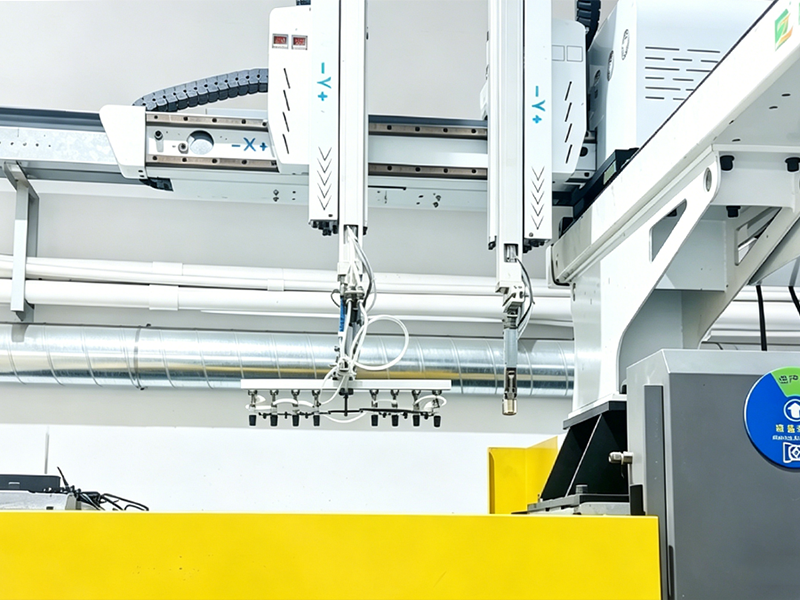
In contrast, production efficiency is higher and labor costs are easier to control when the mold structure is stable, automatic ejection operates smoothly, the product requires minimal post-processing, and robotic arms can be used for automatic part removal.
The yield rate directly impacts the actual production cost. Poor mold design or unstable injection molding parameters can lead to defects such as flash, sink marks, warpage, weld lines, gas traps, ejector pin marks, short shots, or dimensional deviations. These defective parts not only waste material but also increase costs associated with manual sorting, rework, and delivery risks.
Therefore, a low unit price does not necessarily equate to low overall cost. For long-term mass production projects, a stable mold structure, appropriate material selection, a mature injection molding process, and strict quality control are essential to truly reducing long-term costs.
In summary, injection molding production costs are not determined solely by material prices; rather, they result from the interplay of material, product weight, cycle time, machine tonnage, number of mold cavities, labor input, and yield rate.
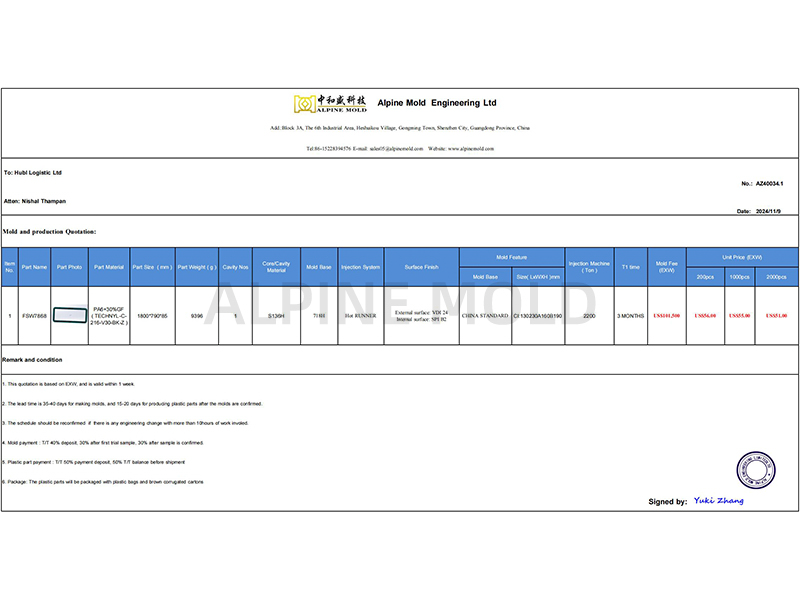
Many customers ask directly during the inquiry stage, "How much does plastic injection molding cost?" In reality, however, it is difficult to provide a single fixed price. Because every plastic product differs in terms of dimensions, structure, material, mold lifespan, production volume, and quality requirements, final quotes vary significantly. Generally, injection molding expenses are divided into two parts: the initial cost of the injection mold and the subsequent per-unit production cost.
If your project involves a simple plastic housing with an uncomplicated mold structure and low production volume, the overall cost is relatively easy to control. However, if your product incorporates features such as sliders, lifters, internal threads, transparent or high-gloss finishes, tight tolerances, multi-cavity structures, or hot runner systems, both mold manufacturing and production costs will increase accordingly.
The following prices can serve as a preliminary reference for injection molding projects:
Project Type |
Mold Cost Reference |
Unit Production Cost Reference |
Suitable Projects |
Simple Sample Mold / Prototype Mold |
$1,000–5,000 |
Depends on material and quantity |
Product validation and low-volume testing |
Simple Single-Cavity Production Mold |
$3,000–10,000 |
About $0.10–1.00/part |
Standard plastic housings and small plastic components |
Medium-Complexity Mold |
$10,000–30,000 |
About $0.30–3.00/part |
Electronic housings, industrial components, and consumer products |
Multi-Cavity Production Mold |
$20,000–60,000+ |
Lower unit cost |
High-volume production projects |
High-Precision / Complex-Structure Mold |
$30,000–100,000+ |
Evaluated based on material, cycle time, and process requirements |
Medical parts, automotive parts, transparent parts, and precision functional components |
Large Injection Mold |
$50,000–150,000+ |
Evaluated based on part weight and machine tonnage |
Automotive exterior parts, home appliance housings, and large industrial parts |
Please note that the prices mentioned above represent a typical market range rather than fixed quotes. Actual injection molding costs must be calculated based on your specific 3D drawings and project requirements. For instance, consider the difference between a small 30g ABS housing and a large 800g PA66+GF automotive structural component; although both are injection-molded products, factors such as material costs, mold steel requirements, machine tonnage, production cycles, and inspection standards differ significantly.
To get an accurate quote, the most important step is not simply asking "how much does it cost," but rather preparing comprehensive project information. The more complete the information, the more accurately a supplier can assess the mold structure and production complexity, resulting in a quote that closely reflects the actual cost.
3D drawings are the most critical data for an injection mold quote. Common formats include STEP, IGS, and X-T. These drawings allow engineers to examine product dimensions, wall thickness, undercuts, snap-fits, threads, ribs, assembly structures, parting lines, and the mold release direction. This analysis determines whether the mold requires features such as sliders, lifters, inserts, hot runner systems, or other complex mechanisms.
If you currently only have product photos or physical samples, you can send them to the supplier for a preliminary assessment. However, obtaining a formal quote usually requires 3D drawings or scan data from the sample.
If your product involves assembly requirements, functional dimensions, or strict tolerances, it is advisable to provide 2D drawings as well. 2D drawings help suppliers verify critical dimensions, tolerance ranges, surface finish requirements, thread specifications, assembly locations, and inspection standards.
For standard plastic parts, looser tolerances generally make it easier to control mold and production costs; conversely, if the product demands high dimensional precision, costs for mold machining, trial adjustments, and inspection will increase accordingly. Therefore, clearly defining tolerance requirements enables suppliers to estimate injection molding costs more accurately.
The choice of plastic material directly impacts cost of injection moldings. Different materials vary in price, shrinkage rate, flowability, strength, temperature resistance, wear resistance, and molding complexity. For instance, PP and ABS generally have lower costs and are suitable for standard plastic parts, whereas engineering plastics like PC, PA, POM, and PMMA are more expensive. Costs and molding complexity increase further if the material requires specific properties such as fire resistance, UV resistance, food-grade or medical-grade certification, or glass-fiber reinforcement.
If you are unsure which material to choose, inform the supplier about the product's operating environment and performance requirements—such as the need for high-temperature resistance, impact resistance, fire retardancy, transparency, corrosion resistance, suitability for outdoor use, or medical-grade contact. This allows engineers to recommend the most appropriate material for the specific application.
Production volume influences the mold strategy and the cost per unit. If you only need a few hundred to a few thousand units, the supplier might suggest using a simple mold, a single-cavity mold, or rapid tooling to keep upfront mold costs low. Conversely, if you plan for long-term mass production—with annual requirements of 50,000, 100,000, or more units—it may be more cost-effective to opt for multi-cavity molds, hot runner systems, and higher-grade mold steels with longer service lives.
Therefore, when requesting a quote, it is best to provide your estimated annual or monthly production volume. This helps the supplier determine whether a single-cavity mold, multi-cavity mold, or family mold is the most rational choice, striking a balance between initial mold costs and long-term production costs.
Surface finish requirements also affect the quotation. Common finishes include glossy, matte, textured, mirror-polished, transparent high-gloss, spray painting, electroplating, screen printing, pad printing, and laser engraving. Higher aesthetic standards necessitate more rigorous mold polishing, texturing, trial-run adjustments, and quality inspections.
If the product requires additional processes—such as heat-set inserts, insert molding, assembly, packaging, ultrasonic welding, or secondary processing—these should be specified upfront during the inquiry stage. Failure to do so could lead to unexpected costs later, impacting the overall cost of injection molding.
Many clients simply state "I need injection-molded products" when making inquiries, but different requirements call for different quoting approaches. You first need to clarify whether you only require the supplier to manufacture the mold and ship it to your factory for production, or if you want the supplier to handle the entire process—including mold manufacturing, mold trials, sample approval, and subsequent mass production.
If you only need the mold, the quotation will focus on mold structure, steel grade, number of cavities, mold lifespan, and lead time. If you require both the mold and mass production, the supplier will also need to evaluate material costs, injection molding cycle times, machine tonnage, labor, yield rates, packaging, and shipping methods. Specifying your requirements upfront helps you obtain a comprehensive quote more quickly.
To streamline the quotation process, you can prepare the following information when submitting your inquiry:
Quotation Information |
Recommended Details to Provide |
3D Drawing |
STEP, IGS, or X-T format is preferred |
2D Drawing |
Dimensions, tolerances, threads, assembly requirements, and inspection requirements |
Product Material |
ABS, PP, PC, PA66, POM, PMMA, TPE, etc. |
Production Quantity |
Annual volume, monthly volume, or first order quantity |
Surface Requirements |
Glossy, matte, texture, polishing, painting, silk screen printing, etc. |
Color Requirements |
Color code, transparent, black, white, or custom color |
Mold Life |
100,000, 300,000, 500,000, or 1,000,000 shots |
Cavity Requirements |
Single-cavity, multi-cavity, or let the supplier recommend based on production volume |
Secondary Processing Requirements |
Heat-set inserts, assembly, painting, laser engraving, packaging, etc. |
Service Scope |
Mold making only, or mold manufacturing plus injection molding production |
In summary, to obtain an accurate injection molding quote, you need to provide the supplier with as much information as possible about your product and production goals. Relying solely on a picture or rough dimensions usually yields only a broad price estimate; comprehensive 3D drawings, material specifications, production volume plans, and surface finish requirements enable suppliers to provide a more accurate and reliable cost assessment.
Injection molding costs are not fixed; they are determined by a combination of factors, including mold costs, material costs, production costs, product design, mold lifespan, production volume, surface finish requirements, and post-processing methods. For a plastic product project, the initial mold cost is just one part of the total expense; long-term budget impacts are also driven by production cycle times, material utilization rates, yield rates, and mass production stability.
At Alpine Mold, we specialize in injection mold manufacturing and injection molding services. We can help you evaluate mold solutions, production costs, and mass production feasibility based on your 3D drawings, material requirements, product design, and production volume. If you are developing a new plastic product, please send us your drawings, and we can provide a precise injection molding quote and project recommendations.
Injection molding costs are high primarily due to the need for custom molds during the initial phase. The mold-making process involves multiple stages, including DFM (Design for Manufacturability) analysis, design, steel procurement, CNC machining, EDM (Electrical Discharge Machining), assembly, and mold trials. However, in mass production, the mold cost is amortized across the total number of units, causing the per-unit cost to decrease over time.
The main disadvantages of injection molding are the high initial mold cost, the relatively long development cycle, and specific design constraints. Issues such as uneven wall thickness, excessive undercuts, or designs unsuitable for easy demolding can lead to increased mold modification costs and production risks later on.
It depends on the production volume. For small batches of samples or rapid prototyping, 3D printing is usually cheaper because it does not require mold fabrication. However, if a product requires production runs of thousands or tens of thousands of units, or long-term mass production, the per-unit cost of injection molding is usually lower, making it better suited for stable, high-volume manufacturing.
Injection molding is widely used for automotive parts, medical device housings, electronics and electrical appliances, home appliances, industrial components, consumer goods, transparent plastic parts, and packaging products. Whenever a product requires dimensional stability, mass production, and high consistency, injection molding is typically the preferred choice.
Yes. Steel molds are usually more expensive than aluminum molds because steel has higher strength, better wear resistance, and a longer mold life. Aluminum molds are often used for prototypes or low-volume production, while steel molds are more suitable for medium- to high-volume production and long-term use.
Reducing injection molding costs can be approached through product design, mold structure, material selection, and production efficiency. Common methods include:
1. Optimizing product structure: Conduct a DFM (Design for Manufacturability) assessment before mold creation to check for features such as undercuts, deep ribs, sharp corners, thick walls, or structures that are difficult to demold, thereby minimizing the risk of costly mold modifications later on.
2. Maintaining reasonable wall thickness: Excessive wall thickness increases material usage and cooling time, and can lead to defects like sink marks, depressions, or warping. An optimal wall thickness helps reduce both material costs and production cycle times.
3. Reducing post-processing steps: If desired aesthetics and functionality can be achieved through mold texturing, internal mold features, or colored materials, you can eliminate additional costs associated with processes like painting, screen printing, assembly, and heat-set inserts.
4. Optimizing the cooling system and production cycle: An effective cooling design shortens the injection molding cycle and boosts production efficiency. For long-term mass production projects, shaving even a few seconds off the cycle time can significantly lower overall injection molding costs.


