WhatsApp: +86 18126157548 Email: kerry@alpinemold.com

Views: 0 Author: Site Editor Publish Time: 2026-05-23 Origin: Site


PSU injection molding is widely used for manufacturing high-performance plastic parts that require heat resistance, dimensional stability, and long-term durability. As a high-performance PSU plastic material, polysulfone offers excellent mechanical strength, thermal resistance, chemical resistance, and electrical insulation, making it suitable for medical, electrical, industrial, and fluid-handling applications.
PSU, also known as Polysulfone, is a high-performance thermoplastic material used for parts that need better heat resistance, strength, and dimensional stability than common plastics such as ABS or PP. This PSU plastic material performs well in demanding applications where the part must resist high temperature, repeated use, and structural stress.
PSU injection molding is the process of melting PSU resin and injecting it into a precision mold to form finished plastic parts. Because PSU has a high processing temperature and relatively strong melt viscosity, the molding process requires proper material drying, mold temperature control, and stable injection parameters. When processed correctly, PSU injection molded parts can achieve good mechanical performance, stable dimensions, and reliable long-term use in medical, electrical, industrial, and fluid-handling applications.
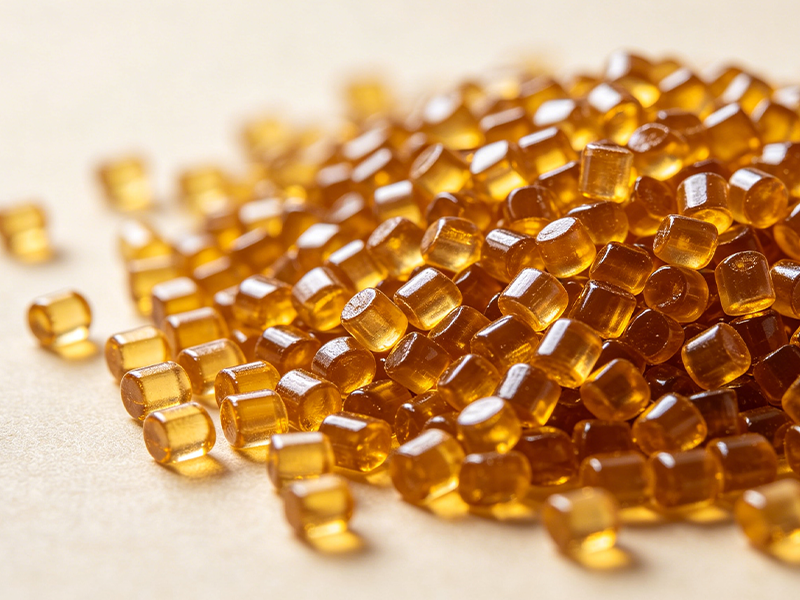
The performance of PSU injection molding mainly comes from the excellent properties of PSU plastic material. PSU offers strong heat resistance, dimensional stability, mechanical strength, and good electrical insulation, making it suitable for precision plastic parts used in demanding environments.
Because of these PSU material properties, PSU injection molded parts are often used in medical devices, electrical components, fluid systems, and industrial equipment. However, PSU requires higher processing temperatures than common plastics, so proper drying, mold temperature control, and stable injection parameters are important during the PSU injection molding process.
PSU Material Properties | Benefits for Injection Molded Parts |
High heat resistance | Helps parts keep strength and shape under high temperature |
Dimensional stability | Supports tight tolerance and stable assembly |
Mechanical strength | Suitable for structural and functional plastic parts |
Chemical resistance | Performs well in cleaning, fluid, or industrial environments |
Electrical insulation | Suitable for electrical and electronic components |
The PSU injection molding process requires higher processing temperatures, more stable molding conditions, and stricter process control than standard plastics. Because PSU plastic material has excellent heat resistance and relatively high melt viscosity, each step of the molding process must be carefully controlled to produce high-quality PSU injection molded parts.
From material drying to final inspection, the PSU injection molding process directly affects part appearance, dimensional stability, mechanical strength, and long-term performance. Improper drying, unstable mold temperature, or poor injection parameters may lead to defects such as silver streaks, short shots, internal stress, warpage, surface marks, or dimensional variation.
Below is a typical step-by-step process for PSU plastic injection molding.
Before injection molding, PSU resin must be fully dried. PSU plastic material can absorb moisture from the air, and if the material is not dried properly, moisture may vaporize during high-temperature processing.
This can cause common molding defects such as silver streaks, bubbles, surface marks, poor transparency, or reduced mechanical strength. For stable PSU injection molding, proper drying temperature and drying time are essential before production starts.
Typical drying conditions for PSU are usually around 120–150°C for 3–4 hours, depending on the resin supplier’s recommendation and storage conditions.
PSU injection molding usually requires a higher mold temperature than common engineering plastics. A stable mold temperature helps improve melt flow, reduce internal stress, and maintain better surface quality.
If the mold temperature is too low, PSU material may cool too quickly inside the cavity, leading to poor filling, flow marks, high internal stress, or unstable dimensions. For precision PSU injection molded parts, mold temperature control is especially important for maintaining consistent quality during mass production.
In many PSU molding projects, the mold temperature is commonly controlled around 140–180°C.
During the plasticizing stage, PSU resin is heated inside the injection molding machine barrel until it reaches a suitable melt state. Because PSU is a high-performance thermoplastic with high heat resistance, it requires a much higher melt temperature than materials such as ABS, PP, or PC.
The melt temperature for PSU injection molding is commonly around 330–390°C. The temperature must be stable and properly controlled to ensure good material flow without overheating or material degradation.
Screw speed should also be controlled at a medium level. Excessive screw speed may generate too much shear heat, while insufficient plasticization may affect filling stability and part quality.
After the PSU material is fully melted, it is injected into the mold cavity under medium to high injection pressure. Since PSU plastic material has relatively high melt viscosity, the filling stage requires enough pressure and proper injection speed to ensure the cavity is completely filled.
If the injection speed or pressure is too low, defects such as short shots, weld lines, poor surface finish, or incomplete filling may occur. However, overly aggressive injection settings may increase shear stress, trapped air, or internal stress in the molded part.
For complex PSU injection molded parts, gate location, runner design, venting, and wall thickness should be optimized before mold manufacturing to support balanced filling.
After the cavity is filled, the packing and holding stage helps compensate for material shrinkage and improves dimensional accuracy. Proper holding pressure and holding time are important for reducing sink marks, voids, and dimensional variation.
Compared with common engineering plastics, PSU injection molding usually requires slower cooling and higher mold temperatures. Controlled cooling helps reduce internal stress and improves the mechanical performance of finished PSU molded parts.
Cooling time should be adjusted based on part thickness, product structure, mold temperature, and dimensional requirements. For thick-wall PSU parts, cooling time may need to be extended to ensure stable part quality.
Once the part has cooled sufficiently, it is ejected from the mold. Because PSU plastic material has relatively high stiffness, proper draft angle, smooth mold surface, and balanced ejection design are important to prevent scratches, stress marks, deformation, or cracking during demolding.
After ejection, PSU injection molded parts should be inspected for appearance, dimensions, flatness, warpage, gate marks, weld lines, and functional requirements. For precision PSU parts used in medical, electrical, or industrial applications, dimensional inspection and process stability are especially important.
A stable PSU injection molding process not only improves part quality but also supports long-term production consistency.
The table below shows common processing parameters used for PSU plastic injection molding:
Processing Parameter | Recommended Range |
Drying Temperature | 120–150°C |
Drying Time | 3–4 hours |
Melt Temperature | 330–390°C |
Mold Temperature | 140–180°C |
Injection Pressure | Medium to High |
Screw Speed | Medium |
Cooling Time | Depends on part thickness |
Designing high-quality PSU injection molded parts requires more than selecting the right material. Since PSU plastic material has high rigidity and heat resistance, proper part structure and mold design are important for maintaining stable molding quality and reducing production defects.
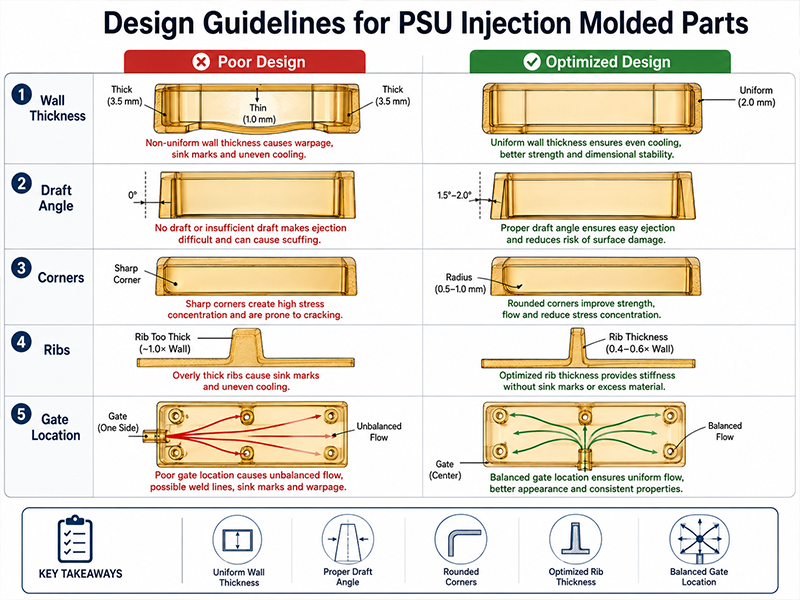
Uniform wall thickness is one of the most important design principles in PSU injection molding. Because PSU plastic material has relatively high melt viscosity, large wall thickness differences may cause unbalanced filling, uneven cooling, sink marks, warpage, and internal stress.
For most PSU injection molded parts, a recommended wall thickness range is usually around 1.5 mm to 3.5 mm. For small precision components, the wall thickness can sometimes be designed around 1.2 mm to 2.0 mm, but the flow length, gate location, and filling pressure must be carefully evaluated. For structural or load-bearing PSU parts, wall thickness may be increased, but overly thick sections should be avoided.
A good rule is to keep wall thickness variation within ±20% whenever possible. If the part must transition from a thick area to a thin area, the transition should be gradual instead of sudden. A smooth thickness transition can help improve melt flow, reduce cooling stress, and improve dimensional stability.
If the wall is too thin, PSU material may have difficulty filling the cavity, especially in long-flow areas. This can lead to short shots, weld lines, or high injection pressure. If the wall is too thick, cooling time increases, and the part may suffer from sink marks, voids, internal stress, or dimensional instability.
Ribs are commonly used to improve part strength without increasing the full wall thickness. However, for PSU injection molded parts, ribs must be designed carefully because PSU has high stiffness and is more sensitive to internal stress than many standard plastics.
In most cases, the rib thickness should be around 50%–60% of the nominal wall thickness. For example, if the main wall thickness is 2.5 mm, the rib thickness is usually better controlled around 1.25–1.5 mm. If the rib is too thick, it may cause sink marks on the opposite surface and increase cooling time.The rib height is generally recommended to be no more than 2.5–3 times the nominal wall thickness. If a taller rib is required for strength, adding multiple thinner ribs is often better than using one overly thick rib.
Bosses should also avoid excessive material concentration. For screw bosses or assembly posts, the boss wall thickness should usually be around 50%–60% of the main wall thickness. The boss should be connected to the surrounding wall by support ribs instead of being designed as a large solid cylinder. This helps reduce sink marks, shrinkage, and cracking around the boss area.
Because PSU material properties include high rigidity and relatively low flexibility, proper draft angle design is very important for smooth ejection. If the draft angle is too small, the part may stick to the mold, causing scratches, drag marks, stress whitening, deformation, or cracking during ejection.
For general PSU injection molded parts, a minimum draft angle of 1° per side is recommended. For deeper ribs, deep cavities, or high vertical walls, 1.5°–2° per side is usually better. If the surface has texture, matte finish, or EDM texture, the draft angle should be increased according to texture depth.For precision PSU molded parts, draft should be considered at the early design stage. Adding draft later may affect assembly dimensions, sealing areas, or appearance surfaces. Therefore, critical functional surfaces should be clearly defined before mold design.
Because of its excellent heat resistance, dimensional stability, and mechanical performance, PSU plastic material is widely used in industries that require reliable long-term performance. Compared with standard engineering plastics, PSU injection molded parts can maintain structural stability under demanding working conditions, making PSU injection molding suitable for many high-performance applications.
One of the most important applications of PSU injection molding is the medical industry. Many medical devices require plastic components that can withstand repeated steam sterilization, hot water cleaning, and long-term use without deformation or cracking. Thanks to stable PSU material properties, PSU injection molded parts are commonly used for sterilization trays, medical housings, fluid handling components, and reusable healthcare equipment.
In addition, PSU plastic material offers good dimensional consistency and transparency, which are important for precision medical assemblies and visual inspection components. During the PSU injection molding process, stable temperature control and mold design help ensure consistent quality for medical plastic parts.
PSU plastic injection molding is also widely used for electrical and electronic applications. Since PSU material has excellent electrical insulation performance and high thermal resistance, it is suitable for components exposed to continuous heat or electrical load.
Common PSU injection molded parts in this industry include connectors, switch components, insulation parts, sensor housings, and transparent electrical covers. Compared with ordinary plastics, PSU injection molding provides better long-term stability and lower risk of deformation in high-temperature electronic environments.
Industrial equipment and fluid handling systems also frequently use PSU molded parts because of their strength, chemical resistance, and dimensional stability. PSU injection molding is commonly applied to pump housings, valve components, filter systems, and hot water handling parts.
Many industrial applications involve pressure, heat, or repeated fluid exposure, which places higher demands on plastic performance. Proper PSU injection molding process control helps manufacturers produce durable plastic components with stable sealing surfaces and reliable structural performance for long-term industrial use.
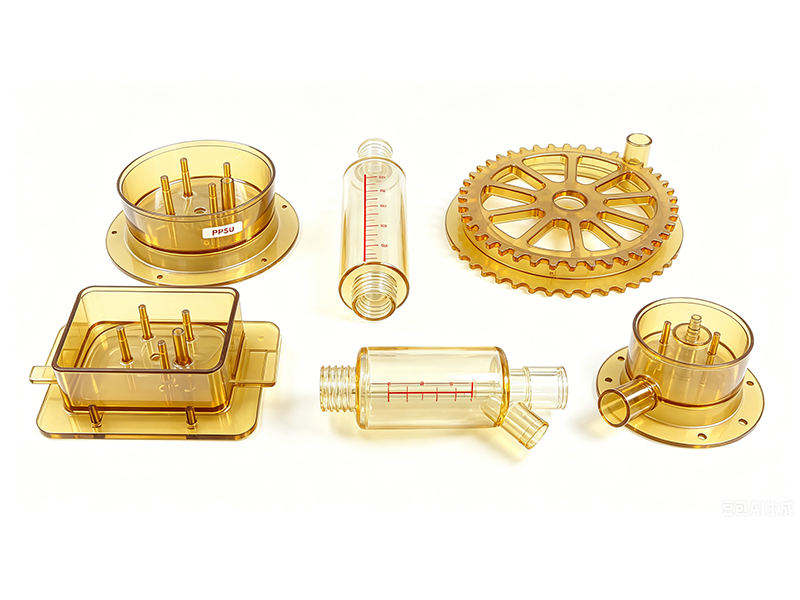
PSU injection molding is an ideal solution for manufacturing high-performance plastic components that require heat resistance, dimensional stability, and long-term durability. With excellent PSU material properties, PSU injection molded parts are widely used in medical, electrical, and industrial applications where standard engineering plastics may not provide sufficient performance. However, successful PSU plastic injection molding also requires proper mold design, stable processing parameters, and experience with high-temperature engineering materials.
At Alpine Mold, we have experience supporting precision PSU injection molding projects from DFM analysis and mold manufacturing to injection molding production. Our engineering team can help optimize the PSU injection molding process to improve part quality, dimensional consistency, and production stability. If you are looking for a reliable partner for PSU injection molded parts or other high-performance plastic projects, feel free to send us your drawings or inquiry for technical evaluation and quotation.
In many high-temperature environments, PSU plastic material performs better than standard polycarbonate (PC). PSU offers higher continuous heat resistance and better dimensional stability, making it more suitable for sterilizable and industrial-grade PSU injection molded parts.
Yes. One advantage of PSU injection molding is that the material naturally has a transparent amber appearance. This makes PSU suitable for transparent covers, medical components, fluid inspection parts, and laboratory equipment.
Compared with common engineering plastics, the PSU injection molding process requires higher melt temperatures and more precise process control. Improper drying or unstable mold temperature may increase internal stress or surface defects during production.
Yes. Because of its excellent hydrolysis resistance and thermal stability, PSU injection molded parts are commonly used in hot water systems, sterilization equipment, and fluid handling applications exposed to heat and moisture.
In certain industries, PSU plastic injection molding can replace metal components to reduce weight and simplify manufacturing. Thanks to strong PSU material properties, some structural, insulating, and fluid-handling parts can be successfully converted from metal to high-performance plastic.


