WhatsApp: +86 18126157548 Email: kerry@alpinemold.com

Views: 0 Author: Site Editor Publish Time: 2026-07-14 Origin: Site


Whether you are reviewing a machining project or learning about manufacturing processes, understanding milling machines helps you better evaluate how complex parts are produced. This article explains what a milling machine is, how it works, its main types, parts, operations, applications, advantages, and limitations.
Table of Contents
| 1. What Is a Milling Machine? |
| 2. How Does a Milling Machine Work? |
| 3. Main Parts of a Milling Machine |
| 4. Types of Milling Machines |
5. Common Milling Machine Operations |
| 6. Applications of Milling Machines |
| 7. Advantages and Limitations of Milling Machines |
| 8. Conclusion |
| 9. FAQs |
A milling machine is a machine tool that removes material from a workpiece by using one or more rotating cutting tools. The workpiece is fixed on a table or fixture, while the cutter moves along different directions to create the required shape and dimensions.
Milling machines can produce flat surfaces, slots, holes, pockets, grooves, contours, and complex three-dimensional features. They are commonly used to machine metals, plastics, graphite, and other solid materials.
Traditional milling machines are operated manually, while a CNC milling machine uses programmed instructions to control tool movement, cutting speed, feed rate, and machining sequence. This makes CNC milling suitable for precise, repeatable, and complex component production.
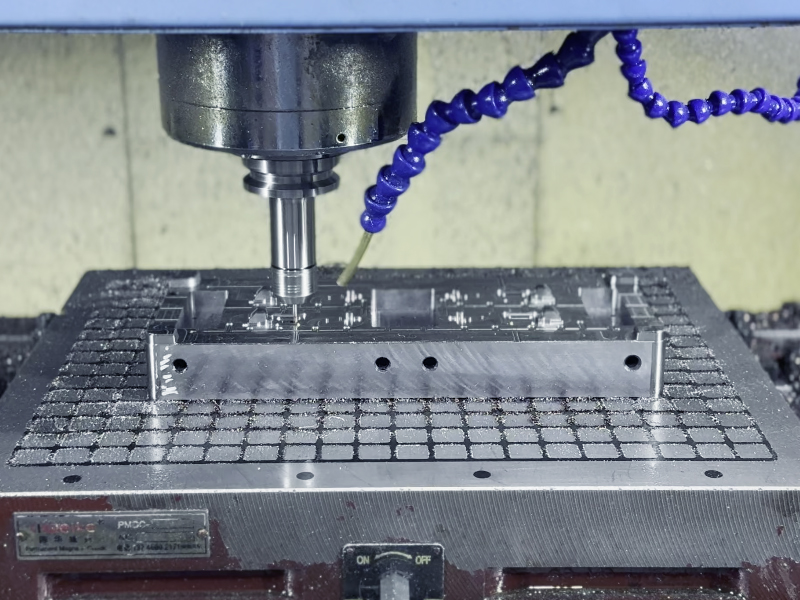
A milling machine works by rotating a cutting tool against a securely fixed workpiece. As the cutter moves along one or more axes, it removes material gradually until the required shape, dimensions, and surface finish are achieved.
The workpiece is secured on the worktable using a vise, clamps, or a custom fixture. Proper clamping prevents movement during machining and helps maintain dimensional accuracy.
A suitable milling cutter is selected according to the workpiece material, part geometry, and machining requirements. Common tools include end mills, face mills, ball nose cutters, and slot cutters.
The spindle speed, feed rate, cutting depth, and tool path are set before machining begins. These parameters directly affect machining efficiency, tool life, accuracy, and surface quality.
The rotating cutter removes material from the workpiece layer by layer. The process may include rough milling, semi-finishing, and finish milling to achieve the final shape and dimensions.
After machining, the finished part is checked using calipers, micrometers, height gauges, or a coordinate measuring machine. This confirms whether the dimensions, tolerances, and surface requirements have been met.
On a manual milling machine, the operator controls the machine movements directly. A CNC milling machine follows programmed instructions to control axis movement, cutting parameters, tool changes, and machining sequences, allowing complex parts to be produced with greater accuracy and repeatability.
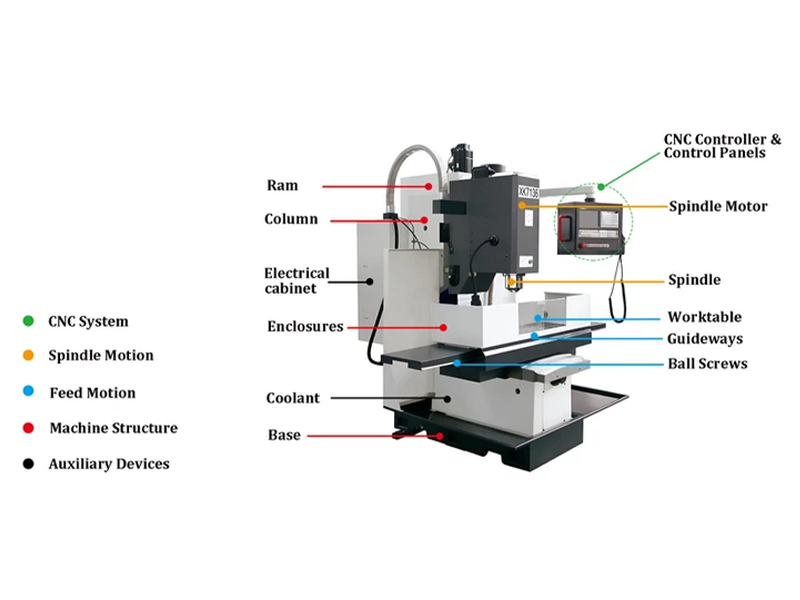
The exact structure of a milling machine varies depending on whether it is manual, CNC, vertical, or horizontal. However, most milling machines contain several common components that support the workpiece, hold the cutting tool, and control machining movement.
Milling Machine Part | Main Function |
Base | Supports the entire machine and helps absorb vibration during machining. |
Column | Forms the main body of the machine and supports the spindle, guideways, and other moving components. |
Worktable | Holds the workpiece, vise, or fixture and moves along one or more axes. |
Spindle | Rotates the milling cutter at the required speed to remove material. |
Tool Holder | Connects the cutting tool to the spindle and keeps it securely positioned during machining. |
Saddle | Supports the worktable and allows controlled movement along the machine axes. |
Guideways | Guide the movement of the table, spindle, or machine head while maintaining accuracy and stability. |
CNC Controller | Reads the machining program and controls axis movement, spindle speed, feed rate, and tool changes. |
Coolant System | Reduces cutting heat, lubricates the tool, and helps remove chips from the cutting area. |
Automatic Tool Changer | Stores and changes cutting tools automatically during CNC milling operations. |
Manual milling machines may also include handwheels and a knee for controlling table movement. Modern CNC milling machines often use servo motors, enclosed work areas, and automatic control systems to improve machining accuracy, safety, and production efficiency.
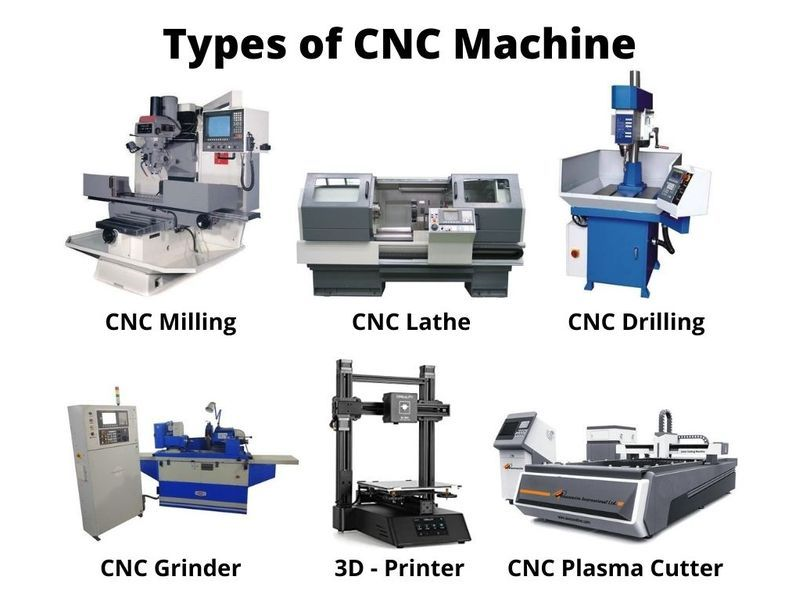
Milling machines can be classified by spindle orientation, control method, number of machining axes, and machine structure. Each type is designed for different workpiece sizes, shapes, accuracy requirements, and production needs.
A vertical milling machine has a spindle positioned vertically above the worktable. The cutting tool moves downward toward the workpiece, making the machining area easy to observe and access.
Vertical milling machines are commonly used for face milling, end milling, drilling, slotting, and pocket machining. Their flexible setup makes them suitable for general mechanical parts, mold inserts, plates, and small to medium-sized components.
A horizontal milling machine has a spindle arranged parallel to the worktable. The cutter is usually mounted on an arbor, allowing the machine to use wider and heavier cutting tools.
Horizontal milling machines provide strong cutting capacity and effective chip removal. They are often used for machining deep slots, side surfaces, large workpieces, and components that require heavy material removal.
A universal milling machine is similar to a horizontal milling machine, but its worktable can usually rotate to different angles. This allows the machine to perform a wider range of milling operations.
Universal milling machines can be used for straight, angled, helical, and complex surface machining. Their flexibility makes them suitable for toolrooms, repair work, small-batch production, and general component manufacturing.
A CNC milling machine uses computer-programmed instructions to control the movement of the cutting tool and workpiece. The program determines the tool path, spindle speed, feed rate, cutting depth, and machining sequence.
Compared with manual milling machines, CNC milling machines offer higher accuracy, repeatability, and automation. They are widely used for precision components, complex geometries, mold cores and cavities, and medium- to high-volume production.
A 3-axis milling machine moves along three linear directions: the X-axis, Y-axis, and Z-axis. These movements allow the cutting tool to machine the top and sides of a workpiece within one setup.
Three-axis milling is suitable for flat surfaces, holes, slots, pockets, and standard mold components. It is one of the most common and cost-effective options for general CNC machining.
A 4-axis milling machine adds a rotary axis to the three standard linear axes. The workpiece can rotate during machining, allowing the cutter to reach multiple sides without frequent repositioning.
Four-axis milling is commonly used for cylindrical parts, curved features, multi-sided components, and parts with holes or details around their circumference. It can reduce setup time and improve positional consistency.
A 5-axis milling machine can move along three linear axes while rotating around two additional axes. This allows the cutting tool to approach the workpiece from multiple angles.
Five-axis milling is suitable for complex surfaces, deep cavities, undercut areas, and high-precision components. In mold manufacturing, it is often used for automotive molds, complex inserts, curved surfaces, and parts that would otherwise require several setups.
A gantry milling machine uses a large bridge-like structure that spans the worktable. The cutting head moves along the gantry while the workpiece remains securely fixed below.
Gantry milling machines are designed for large and heavy workpieces, including large mold plates, automotive molds, machine bases, and structural components. Their rigid structure and large working area support stable machining over long distances.
A milling machine can perform a wide range of cutting operations by using different tools, cutting directions, and tool paths. The most common milling operations are used to create flat surfaces, slots, pockets, contours, holes, and complex three-dimensional features.
Face milling is used to produce a flat surface on the top of a workpiece. The cutter rotates perpendicular to the machined surface and removes material with cutting edges located on its face and outer diameter.
This operation is commonly used for machining mold plates, machine bases, and large flat components.
End milling uses a rotating end mill to cut with both its end and side edges. It can create flat surfaces, shoulders, slots, pockets, and external profiles.
Because of its flexibility, end milling is one of the most widely used operations on both manual and CNC milling machines.
Slot milling is used to machine narrow channels, grooves, keyways, and guide slots. The width and depth of the slot depend on the cutter size and machining path.
This operation is commonly applied to mechanical components, mold inserts, and parts that require locating or guiding features.
Pocket milling removes material from an enclosed area inside the workpiece. The cutter follows a programmed tool path until the required pocket depth and shape are achieved.
It is widely used for machining mold cavities, recessed areas, and internal component features.
Profile milling is used to machine the external or internal outline of a part. The cutting tool follows the required contour to produce straight, curved, or irregular shapes.
This operation is often used for mold cores, inserts, plates, and precision mechanical components.
Contour milling is used to create curved and three-dimensional surfaces. Ball nose cutters are commonly used because their rounded cutting edges can follow complex surface geometry smoothly.
This process is important in mold manufacturing, especially for automotive parts, product housings, and other components with complex shapes.
Modern CNC milling machines can also perform drilling, boring, and tapping operations. Drilling creates holes, boring improves their diameter and accuracy, and tapping produces internal threads.
Combining these operations in one setup helps reduce workpiece repositioning and improve machining consistency.
Rough milling removes large amounts of material quickly and leaves a small machining allowance. Finish milling then removes the remaining material using lighter cuts to achieve the final dimensions and surface quality.
In precision manufacturing, roughing and finishing are often separated to control machining stress, accuracy, tool wear, and surface finish.
Milling machines are widely used in industries that require accurate surfaces, slots, holes, pockets, contours, and complex three-dimensional shapes. Their flexibility makes them suitable for both general component production and high-precision manufacturing.
In general machinery manufacturing, milling machines are used to produce brackets, housings, machine bases, plates, fixtures, and other mechanical components. Manual machines are suitable for simple parts and small batches, while CNC milling machines are commonly used for higher accuracy and repeatability.
Milling machines are essential in mold and die manufacturing. They are used to machine mold bases, plates, cores, cavities, sliders, lifters, inserts, punches, and dies.
Rough milling removes most of the excess material, while semi-finishing and finish milling create the final geometry and surface quality. Five-axis milling machines are often used for complex mold surfaces and multi-angle features. Milling can also produce copper and graphite electrodes for EDM processing.
In the automotive industry, milling machines are used to manufacture engine components, transmission parts, fixtures, prototypes, and mold components. Multi-axis milling is especially useful for parts with curved surfaces, multiple angles, and tight dimensional requirements.
Aerospace parts often require lightweight structures, complex geometries, and strict tolerances. CNC milling machines are used to produce brackets, structural components, turbine parts, and precision aluminum or titanium components.
In the medical industry, CNC milling machines are used to produce surgical instruments, equipment parts, fixtures, prototypes, and precision mold components. Their accuracy and repeatability make them suitable for small and detailed parts.
Milling machines are used to manufacture electronic housings, heat sinks, connectors, mounting components, and precision molds. They can create detailed cavities, mounting holes, slots, and complex external profiles.
In consumer product manufacturing, milling machines are commonly used to produce prototypes, product housings, appliance components, and injection mold parts. CNC milling helps manufacturers achieve consistent dimensions and detailed surface features before mass production.
A milling machine can produce flat surfaces, slots, pockets, holes, profiles, and complex three-dimensional shapes. By changing the cutting tool and tool path, one machine can complete many different operations.
Modern CNC milling machines can maintain tight dimensional tolerances and produce consistent results across multiple parts. This is especially important in mold manufacturing, automotive production, and precision component machining.
Milling machines can process many materials, including aluminum, steel, stainless steel, copper, graphite, engineering plastics, and various mold steels.
Three-axis, four-axis, and five-axis milling machines can produce components with complex surfaces and multiple machining angles. Multi-axis machining also reduces repeated clamping and helps improve positional accuracy.
Milling is suitable for prototypes, one-off components, small batches, and mass production. CNC programs can also be reused when the same part needs to be produced again.
Milling can be combined with drilling, boring, tapping, grinding, EDM, polishing, and inspection. In mold manufacturing, these processes work together to complete cores, cavities, inserts, and other precision components.
CNC and multi-axis milling machines require significant investment. Tooling, fixtures, software, maintenance, and skilled labor also increase the overall machining cost.
Complex parts require accurate CNC programming, tool selection, workholding, and parameter setting. Poor setup or programming can lead to dimensional errors, tool damage, or machining defects.
Cutting tools wear during machining, especially when processing hard materials or using unsuitable parameters. Tool wear can affect accuracy, surface finish, and production efficiency.
Long cutting tools may vibrate or deflect when machining deep cavities and narrow slots. Sharp internal corners are also difficult to produce because milling cutters have a fixed radius.
Parts with detailed surfaces, deep cavities, or tight tolerances may require roughing, semi-finishing, and several finishing operations. This can increase production time.
Every milling machine has limits in travel distance, table size, load capacity, and spindle reach. Large molds or structural components may require a gantry milling machine or other large-scale equipment.
A milling machine uses rotating cutting tools to produce flat surfaces, slots, pockets, holes, contours, and complex three-dimensional shapes. Understanding its working principle, main parts, common types, operations, applications, advantages, and limitations helps manufacturers better evaluate different machining processes.
At Alpine Mold, we use CNC milling, 5-axis machining, EDM, polishing, assembly, and precision inspection to manufacture reliable injection molds and precision mold components. Send us your 3D drawings, material requirements, and estimated production volume for a project evaluation.
A lathe rotates the workpiece while a stationary cutting tool removes material, making it suitable for shafts, cylinders, threads, and other round parts. A milling machine rotates the cutting tool while the workpiece is fixed or moved along different axes, making it better for flat surfaces, slots, pockets, holes, contours, and complex shapes.
Milling machines can process aluminum, steel, stainless steel, copper, brass, graphite, engineering plastics, and different types of mold steel. The cutting tool and machining parameters must be selected according to the material properties.
A vertical milling machine has a vertically positioned spindle and is commonly used for general machining, drilling, pocketing, and mold work. A horizontal milling machine has a horizontal spindle and is better suited for heavy cutting, deep slots, and efficient chip removal.
A manual milling machine requires the operator to control the machine movements directly. A CNC milling machine follows programmed instructions, providing better automation, accuracy, repeatability, and efficiency for complex parts.
A 3-axis milling machine moves along the X, Y, and Z axes and is suitable for standard surfaces, slots, holes, and pockets. A 5-axis milling machine adds two rotary movements, allowing the tool to approach complex surfaces from multiple angles with fewer setups.


