WhatsApp: +86 18126157548 Email: kerry@alpinemold.com

Views: 0 Author: Site Editor Publish Time: 2026-11-26 Origin: Site
Looking for a plastic material with good heat resistance, electrical insulation, and dimensional stability? PBT plastic (Polybutylene Terephthalate) is a popular engineering thermoplastic. In this article, we will explore its properties, types, applications, and processing methods to help you choose the right material for your product.
Table of Contents
1. What Is PBT Plastic? |
2. Properties of PBT Plastic |
3. Types of PBT Plastic |
4. Common Applications of PBT Plastic |
5. Common Processing Methods for PBT Plastic |
6. Conclusion |
7. FAQ |
PBT plastic, short for Polybutylene Terephthalate, is a semi-crystalline thermoplastic polyester widely used in engineering applications. It is formed through the polymerization of terephthalic acid (PTA) or dimethyl terephthalate (DMT) with 1,4-butanediol (BDO).
As an engineering plastic, PBT offers a combination of mechanical strength, heat resistance, electrical insulation, and dimensional stability. It is commonly used to manufacture electrical connectors, automotive components, and appliance parts. You can also choose different PBT grades, such as unfilled, glass-fiber-reinforced, and flame-retardant PBT, depending on your product requirements.
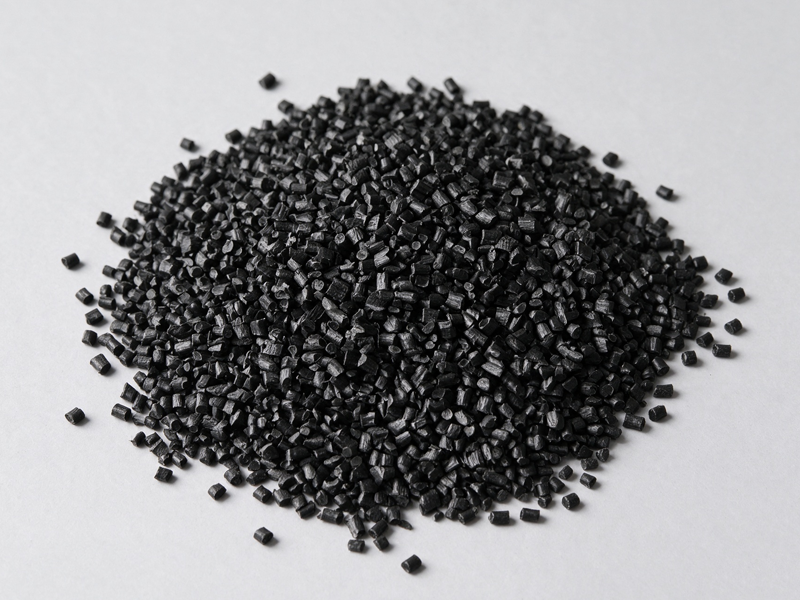
PBT plastic offers a balanced combination of mechanical, thermal, electrical, and chemical properties, making it suitable for various engineering applications. When selecting PBT material for your product, you should consider the following properties to ensure it meets your performance and manufacturing requirements.
PBT provides good tensile strength, stiffness, and dimensional stability, allowing you to use it for structural and functional components. It also offers good wear resistance and maintains its shape under normal mechanical loads. Glass-fiber reinforcement can further improve its strength and rigidity.
PBT has a melting point of approximately 223°C and offers good heat resistance. It can maintain its mechanical properties under elevated temperatures, making it suitable for electrical components, automotive parts, and other products exposed to heat. However, its actual service temperature depends on the material grade and operating conditions.
PBT provides excellent electrical insulation, low dielectric loss, and good electrical performance. These properties make it a popular choice for electrical connectors, terminal blocks, switch components, and other electronic parts where reliable insulation is essential.
PBT offers good resistance to many oils, greases, fuels, and common solvents. This allows you to use it in automotive and industrial applications where components may come into contact with chemicals. However, its compatibility should be evaluated according to the specific chemical and exposure conditions.
Compared with materials such as PA6 and PA66, PBT has relatively low water absorption. This helps reduce dimensional changes caused by moisture and supports more consistent part dimensions. If your product requires precise assembly or stable electrical connections, this property can be particularly valuable.
PBT plastic is available in different grades to meet various product performance requirements. Depending on your application, you can choose unfilled PBT, glass-filled PBT, or flame-retardant PBT. The following sections compare their characteristics and typical properties to help you select the right PBT material for your product.
Unfilled PBT contains no glass fiber reinforcement. It offers good electrical insulation, dimensional stability, chemical resistance, and surface quality. Its typical tensile strength is around 60 MPa, with a flexural modulus of approximately 2.4 GPa and a density of 1.31 g/cm³.
You can choose unfilled PBT for electrical housings, connectors, appliance components, and other parts that require balanced mechanical properties and good surface quality.
Glass-filled PBT is reinforced with glass fibers to improve mechanical strength, stiffness, and heat resistance. Common grades include PBT GF10, GF15, GF20, and GF30, containing approximately 10%, 15%, 20%, and 30% glass fiber by weight, respectively.
As the glass fiber content increases, PBT generally becomes stronger and stiffer, with improved resistance to deformation under mechanical loads. However, higher glass fiber content can also increase brittleness, affect surface appearance, and cause anisotropic shrinkage during injection molding.
The following table compares common glass fiber contents to help you select the right PBT grade for your product.
Glass-Filled PBT Grade Comparison
Material Grade | Glass Fiber Content | Main Characteristics | Recommended Applications |
PBT GF10 | 10% | Moderate improvement in strength and stiffness while retaining good toughness | General electrical housings, appliance components |
PBT GF15 | 15% | Improved rigidity and dimensional stability with a balanced property profile | Electrical connectors, switch components |
PBT GF20 | 20% | Higher mechanical strength, stiffness, and heat resistance | Automotive connectors, electrical components, structural parts |
PBT GF30 | 30% | High rigidity, strength, and resistance to mechanical deformation | Automotive structural components, motor housings, industrial parts |
Flame-retardant PBT contains additives that improve its resistance to ignition and help limit flame propagation. Depending on the formulation and test thickness, some grades can achieve a UL 94 V-0 rating.
For example, a glass-filled, flame-retardant PBT GF20 grade can provide a tensile strength of approximately 115 MPa, a flexural modulus of 7.2 GPa, and a heat deflection temperature of around 203°C at 1.8 MPa. One commercial grade achieves UL 94 V-0 at a tested thickness of 1.6 mm.
You can consider this grade for electrical switches, terminal blocks, circuit protection components, and other electrical products where fire safety is important.
Typical Property Comparison of Different PBT Grades
The following table provides representative values from commercial PBT material data. Actual properties vary depending on the manufacturer, grade, and testing conditions.
Properties | Unfilled PBT | PBT GF15 | PBT GF20 | PBT GF30 |
Glass fiber content | 0% | 15% | 20% | 30% |
Density (g/cm³) | 1.31 | 1.41 | 1.45 | 1.53 |
Tensile strength (MPa) | 60 | 105 | 120 | 140 |
Flexural modulus (GPa) | 2.41 | 5.33 | 6.57 | 9.03 |
HDT at 1.8 MPa (°C) | 70 | 207 | 207 | 213 |
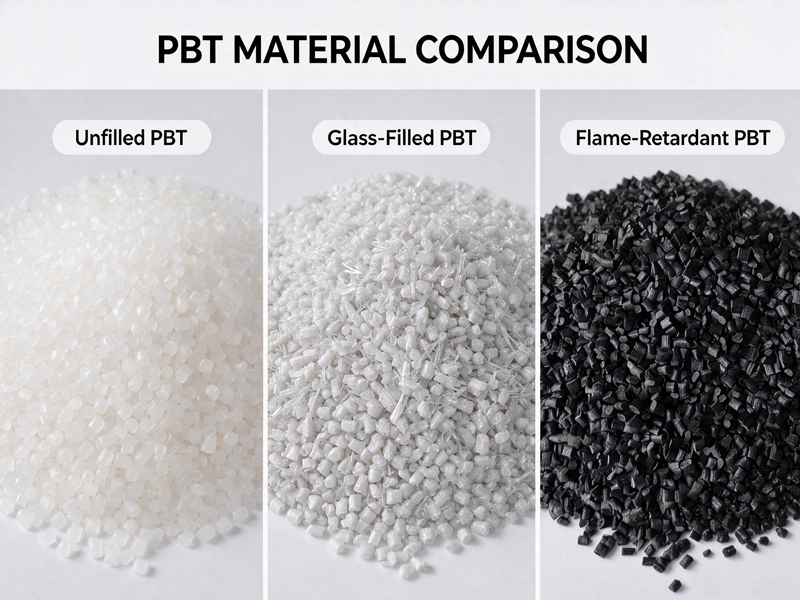
PBT plastic is widely used in industries that require good mechanical strength, heat resistance, electrical insulation, and dimensional stability. Depending on the material grade and product requirements, you can use PBT to manufacture a variety of precision plastic components. The following are three common application industries.
PBT is widely used in electrical and electronic components because of its excellent electrical insulation, dimensional stability, and heat resistance. You can find it in electrical connectors, terminal blocks, switch housings, relay components, and circuit protection parts. For applications requiring higher fire safety, flame-retardant PBT grades are often selected to meet specific UL 94 requirements.
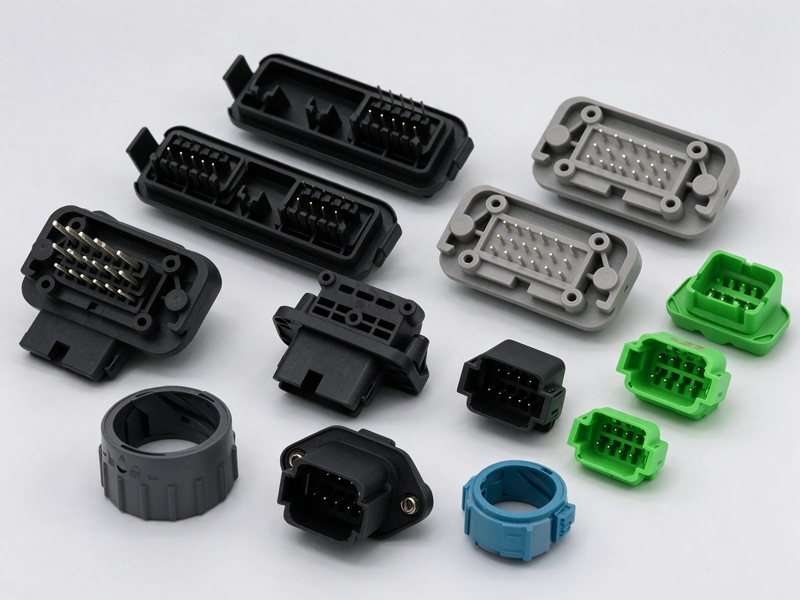
In the automotive industry, PBT is commonly used for components that require mechanical strength, heat resistance, and dimensional accuracy. Typical applications include automotive electrical connectors, sensor housings, ignition system components, and motor parts. Glass-filled PBT is particularly suitable for structural components that need higher stiffness and strength, while its dimensional stability helps maintain reliable assembly.
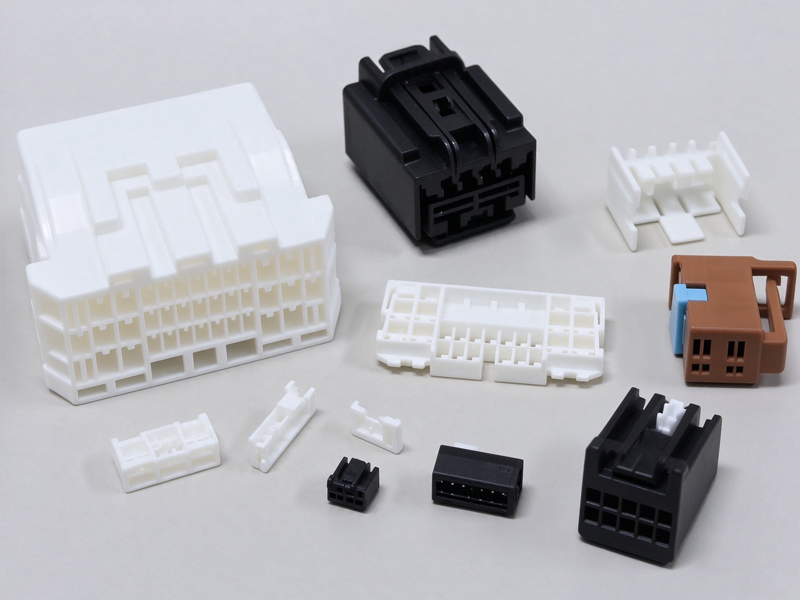
PBT is also used in household electrical appliances, where components may be exposed to heat, electrical loads, and repeated use. Common applications include motor housings, fan components, coffee machine parts, hair dryer components, and electrical switch assemblies. Its electrical insulation and heat resistance make it a practical choice for functional parts that require stable performance during daily operation.
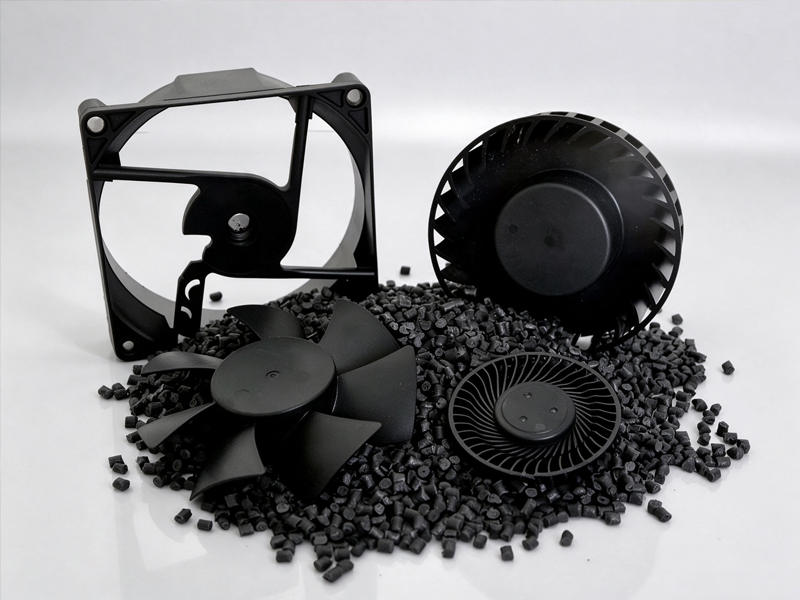
PBT plastic can be processed using several manufacturing methods, including injection molding, extrusion, and compounding. Among these methods, injection molding is widely used for producing precision PBT components with complex geometries and consistent dimensions. The right processing method depends on your product design, material grade, and production requirements.
Injection molding is one of the most common processing methods for PBT plastic. During this process, PBT pellets are heated and melted in an injection molding machine, then injected into a mold cavity under pressure. After cooling and solidification, the finished part is ejected from the mold.
This method allows you to manufacture complex components with precise dimensions and consistent quality. It is widely used for electrical connectors, automotive components, switch housings, and appliance parts.
Typical PBT injection molding parameters include:
Processing Parameter | Typical Range |
Drying Temperature | 120–140°C |
Drying Time | 3–4 hours |
Recommended Moisture Content | Below 0.03% |
Melt Temperature | 235–260°C |
Mold Temperature | 40–80°C |
Injection Pressure | 40–100 MPa |
Before injection molding, you should ensure that the PBT material is properly dried. Excessive moisture can cause hydrolysis during melting, reducing molecular weight and weakening the finished parts. The actual processing parameters should be adjusted according to the material grade, product geometry, and mold design.

Extrusion is a continuous processing method in which melted PBT material passes through a specially designed die to produce products with a consistent cross-sectional shape. It is suitable for manufacturing PBT profiles, sheets, films, and other continuous products.
During extrusion, temperature control is particularly important because PBT is sensitive to excessive heat and prolonged residence time. You need to maintain a stable melt temperature to prevent material degradation and ensure consistent product quality.
Typical PBT extrusion parameters include:
Processing Parameter | Typical Range |
Barrel Zone 1 Temperature | 232–249°C |
Barrel Zone 2–3 Temperature | 232–271°C |
Barrel Zone 4–5 Temperature | 238–277°C |
Die Temperature | 238–282°C |
Melt Temperature | 238–282°C |
Screw L/D Ratio | 24:1–30:1 |
These values are representative processing ranges from specific PBT extrusion grades. You should adjust the temperature profile according to the resin grade, extrusion equipment, and required product dimensions.
Compounding is used to combine PBT resin with additives, glass fibers, flame retardants, and other modifiers to produce customized material grades. The mixture is processed through an extruder, then cooled and cut into pellets for subsequent manufacturing.
This process allows you to customize PBT materials according to specific mechanical, thermal, and electrical requirements. For example, glass fibers can improve stiffness and strength, while flame-retardant additives help meet specific fire safety requirements.
Typical PBT compounding parameters include:
Processing Parameter | Typical Range |
Drying Temperature | 120–140°C |
Drying Time | 3–4 hours |
Melt Temperature | 220–250°C |
Extruder Zone Temperature | 210–245°C |
Screw Speed | Up to 900 rpm |
These values are reference conditions from a commercial PBT compounding grade. Actual settings depend on the formulation, screw configuration, and equipment capacity.
PBT plastic is a versatile engineering thermoplastic offering good mechanical strength, heat resistance, electrical insulation, and dimensional stability. By understanding its different grades, applications, and processing methods, you can select the right material for your product requirements.
At Alpine Mold, we specialize in custom injection mold manufacturing and plastic injection molding. From mold design and manufacturing to production, we provide complete solutions to help you turn your PBT plastic product designs into reliable components.
PBT plastic in its solid, finished form is generally considered stable and is not normally regarded as toxic under typical handling conditions. However, its safety depends on the additives, pigments, and specific material formulation. If you plan to use PBT for food-contact or medical applications, make sure the selected grade meets the relevant safety standards.
PBT and ABS offer different advantages depending on your product requirements. PBT generally provides better heat resistance, electrical insulation, and chemical resistance, while ABS offers good impact resistance, surface appearance, and processing flexibility. You should choose PBT for applications requiring higher thermal and electrical performance, while ABS may be more suitable for general-purpose housings and products requiring good impact resistance.
Despite its good engineering properties, PBT has some limitations. It can be relatively brittle compared with ABS, particularly at low temperatures. It also has lower impact resistance than some engineering plastics, and glass-fiber-reinforced grades may experience anisotropic shrinkage and warpage. You should consider these factors when designing your plastic components.
Yes. PBT is a good engineering plastic for products requiring a combination of mechanical strength, heat resistance, electrical insulation, and dimensional stability. It is particularly suitable for electrical connectors, automotive components, and appliance parts. However, the right material depends on your product's operating environment, performance requirements, and budget.
PBT is a type of polyester, specifically a thermoplastic polyester known as Polybutylene Terephthalate. However, not all polyester materials are PBT. Other common polyesters include PET (Polyethylene Terephthalate). Although they belong to the same polymer family, they have different molecular structures, properties, and processing characteristics.


